Compare Clean Beauty Boxes Under $40 for Sensitive Skin
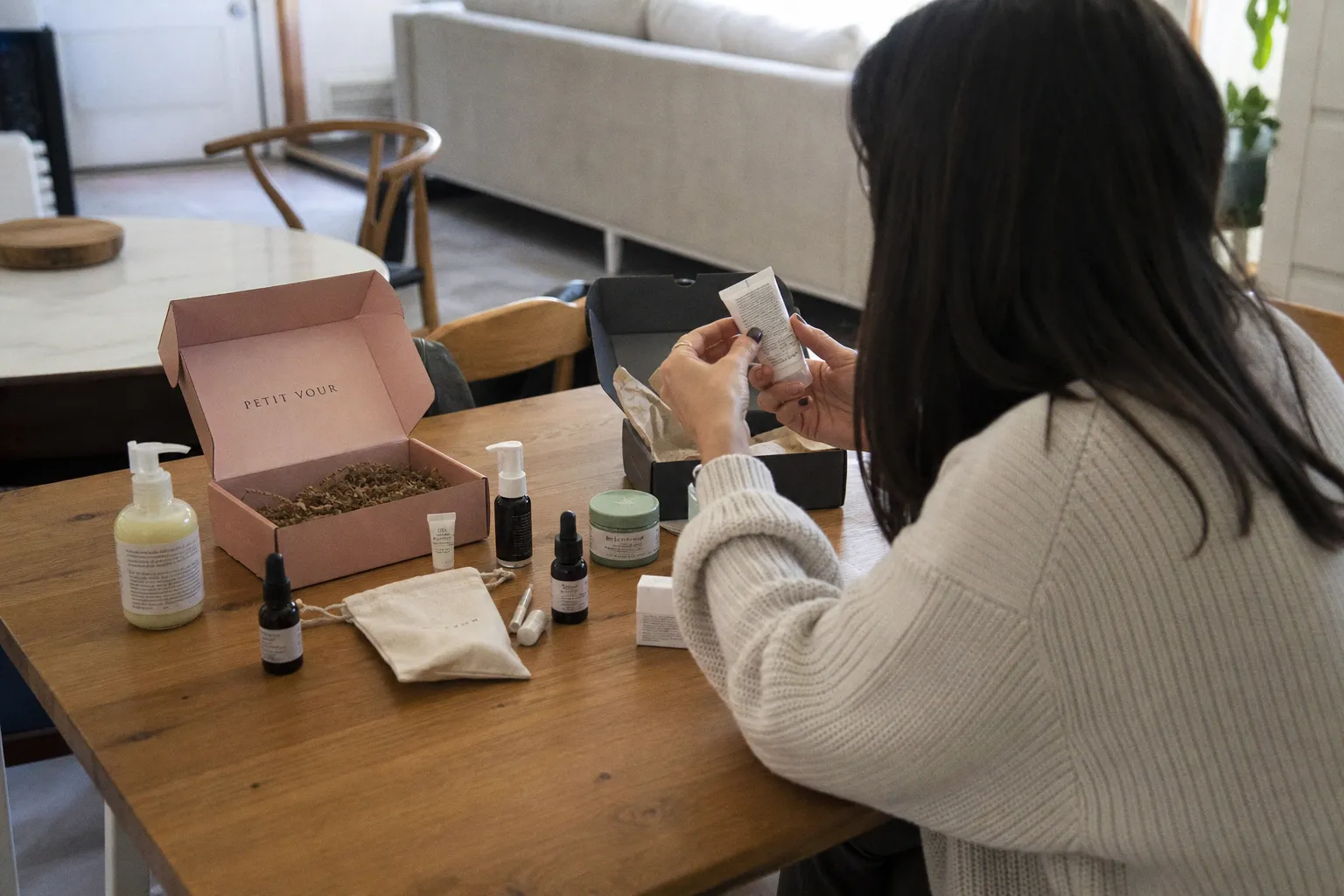
That is the math most beauty subscriptions prefer to bury under retail-value claims. A box may advertise $80 in MSRP for $25. Fine. But for sensitive skin, MSRP is not value. Usable ounces are value. Fragrance-free formulas are value. Ingredient disclosure before billing is value. Full customization would be value, though most budget clean beauty subscriptions do not provide it.
The job, then, is not to find the prettiest “clean” box. It is to check, compare, and discount clean beauty boxes under $40 for sensitive skin with the same suspicion you would apply to a credit-card statement.
For related context, see Australia Cosmetics Market 2026: Premium Beauty, Clean Labels & Digital Retail Growth.
The “clean” label is not a safety standard
Start with the defect in the category: “clean beauty” has no single legally regulated definition. Brands build their own exclusion lists. One company’s clean means vegan and cruelty-free. Another means no parabens, phthalates, sulfates, or synthetic fragrance. Another simply means the marketing department got involved.
That matters because sensitive skin does not care about branding. Contact dermatitis does not read a free-from list and politely stand down. A plant extract can irritate. An essential oil can irritate. A “natural” fragrance compound can irritate. Clean does not equal hypoallergenic.
For a consumer trying to compare clean beauty boxes under $40 for sensitive skin, the first filter is definition control. Before price, before packaging, before “retail value,” the question is: what does this box mean by clean?
A usable clean beauty subscription should publish at least three things:
- Its ingredient exclusion list, not just a paragraph about “better beauty.”
- Its cruelty-free or vegan standard, if that is part of the promise.
- The product lineup or at least enough monthly preview information to check ingredients before the box ships.
If those are missing, the box is asking for blind trust. Blind trust has poor value retention.
“Clean” is a claim. Fragrance-free is a usable data point. Full ingredients are the audit trail.
Petit Vour is one of the few budget names that belongs in this conversation because its clean beauty box starts at about $25 per month and focuses on vegan, cruelty-free products. That gives it a defined ethical screen. It does not, by itself, make the box safe for reactive skin. Vegan beeswax replacement or botanical oil is still capable of causing a reaction. But at least the box has a visible starting framework, and at this price point, visible framework is not nothing.
The mistake is treating vegan and cruelty-free as skin-risk controls. They are not. They are sourcing and ethics controls. Useful. But separate.
The price test: subscription cost versus usable retail value
Budget beauty boxes live on the spread between subscription price and claimed MSRP. That spread gets weaker the moment you introduce sensitivity restrictions.
A $30 box with five products and $90 claimed retail value looks efficient on paper. If two items include fragrance, one includes an essential oil blend, and one is a shade product you will not wear, the usable value may be one moisturizer sample and a lip balm. That is not a $90 box. That is a $30 gamble with filler.
Here is the cleaner way to compare boxes under $40:
| Parameter | Stronger box | Weaker box |
|---|---|---|
| Monthly cost | Under $40 including shipping | Under $40 before shipping, fees, or taxes |
| Ingredient access | Full product ingredients available before billing or shipping | Ingredients hidden until delivery |
| Sensitive-skin fit | Frequent fragrance-free skincare, low-essential-oil formulas | “Natural scent,” “aromatherapy,” or “unscented” without clarification |
| Customization | Some profile control or product choice | Fully curated with no exclusion options |
| Retail value claim | Based on full-size or clearly sized items | Inflated by tiny samples at full-size MSRP math |
| Failure cost | One unusable item still leaves box value intact | One irritant wipes out most of the box value |
The relevant metric is not advertised retail value. It is usable retail value after exclusions.
For sensitive skin, exclusions are not preferences. They are loss events. If you already know that lavender oil, limonene, linalool, menthol, citrus peel oil, or unspecified fragrance causes trouble, every month becomes an inventory audit. A box that will not show its ingredient deck before shipping transfers risk to you.
That risk should be priced. If a box costs $25 and historically sends one safe item out of four, your effective cost per usable item is $25, not $6.25. If another box costs $38 but lets you choose two items and avoid fragrance-heavy formulas, it may be the better buy. Higher sticker price. Lower waste.
Fragrance-free is not the same thing as unscented
This is where many clean beauty boxes lose the sensitive-skin customer.
Dermatology guidance favors “fragrance-free” over “unscented” for reactive skin. The difference is not cosmetic. “Fragrance-free” means no fragrance has been added for scent. “Unscented” may still contain masking fragrance to neutralize the base odor of the formula.
That distinction affects cleansers, moisturizers, facial oils, masks, body lotions, and sunscreen samples. It also affects the “spa” products that subscription boxes like to use as padding: bath soaks, aromatic oils, hand creams, pillow sprays, body scrubs. These items often help MSRP. They rarely help sensitive facial skin.
A clean beauty box can be technically clean and still fragrance-loaded. Essential oils are a common route. So are fragrant extracts. The label may read well. The skin result may not.
When comparing boxes, downgrade any monthly assortment that leans on:
1. Essential oil blends without clear concentration context. Lavender, citrus, peppermint, eucalyptus, and tea tree are common in clean beauty. They are also common irritants for some users.
2. “Natural fragrance” listed as a single term. It may fit the brand’s clean rulebook. It still hides the components that matter to sensitive skin.
3. Aromatherapy positioning. In beauty-box economics, scent-heavy items often function as filler. They pad the experience and the MSRP. They do not improve tolerability.
4. Unclear “unscented” claims. If the item is not explicitly fragrance-free, treat it as unresolved until the ingredient list proves otherwise.
5. Face masks with long botanical decks. More extracts mean more possible triggers. Not always a problem. But the risk surface expands.
This is not an argument for sterile formulas only. It is an argument for identifying what you are paying for. If the box sells clean beauty for sensitive skin but sends scented products month after month, the box is misaligned with the use case.
Use the EWG Skin Deep database as a pre-shipment filter
A budget subscription box becomes more defensible when it gives you time to check the items. The Environmental Working Group’s Skin Deep database lets users look up cosmetic ingredients and safety ratings. It is not a perfect substitute for patch testing or medical advice. It is, however, a practical screening tool when a box posts upcoming products.
The workflow is simple. Not glamorous. Useful.
1. Pull the full ingredient list for each previewed item. Do not rely on the product name. “Calming botanical serum” says nothing.
2. Search unfamiliar ingredients in the EWG Skin Deep database. Focus on fragrance components, preservatives, exfoliating acids, and plant extracts.
3. Flag repeat offenders from your own history. Your skin record matters more than a generic score.
4. Separate face-use items from body-use items. A scented hand cream may be tolerable for some users. A scented facial moisturizer is a larger bet.
5. Calculate usable value before the renewal date. If the next box has two automatic rejects, skip or cancel if the service permits it.
There is a useful discipline here: decide before the box arrives. Beauty subscriptions profit from delay. The customer waits, opens, dislikes two items, forgets to cancel, and pays again. That is subscription depreciation. Value erodes through inaction.
For broader lifestyle reading that sits outside beauty subscriptions, resources such as OK Bharat cover practical consumer and culture topics; for this category, though, the only external database I would actually use in the buying decision is ingredient-focused.
EWG Verified can also be a positive signal when present. But do not overstate it. The budget-box market changes inventory frequently, and many subscriptions under $40 do not guarantee that every monthly product will carry third-party verification. A single verified item in a box does not sanitize the whole box.
Limited customization is the main budget-box liability
Most beauty subscriptions under $40 are curated, not fully controlled. That is the business model. The company buys or partners for inventory, builds a themed assortment, and sends variations. Full customization costs money. Inventory flexibility costs money. Sensitive-skin accommodations cost money.
So the under-$40 buyer faces a structural problem: the cheaper the box, the less control you usually get.
This is not automatically fatal. It just changes the valuation.
A box with limited customization can still work if it has conservative product selection: fragrance-free moisturizers, barrier-support creams, bland cleansers, mineral sunscreen samples, simple lip products, and low-risk makeup. It fails when the assortment depends on “discovery” items with long ingredient lists and scent-driven positioning.
The risk profile looks like this:
| Box feature | Financial effect | Sensitive-skin effect |
|---|---|---|
| No item choice | Higher chance of waste | More exposure to known triggers |
| Partial profile quiz | Some reduction in mismatch | Useful only if fragrance and allergens are included |
| Skip option | Preserves cash when previews look poor | Strong value if previews arrive before billing |
| Monthly spoilers | Lets buyer audit ingredients | Essential for reactive skin |
| Mystery items | Inflates excitement marketing | Raises failure rate |
| Full-size products | Better MSRP efficiency | Worse if the item is unusable |
The best feature for a sensitive-skin subscriber is not a cute makeup bag. It is the ability to skip. A skip option turns a subscription from a recurring liability into a controlled purchase. Without it, each billing cycle is an automatic exposure event.
In a sensitive-skin box, “surprise” is not a benefit. It is an unpriced risk.
Also watch product category mix. Makeup boxes and skincare boxes behave differently. A monthly makeup bag may send mascara, brow gel, powder blush, or lip color. These can still irritate, especially around eyes and lips, but the exposure area is often smaller than with a full-face serum or moisturizer. Skincare boxes, by contrast, send products designed for broad application and longer skin contact. More potential upside. More downside.
If your skin is highly reactive, a makeup-heavy clean box may be less risky than a skincare-heavy clean box. If your issue is eye sensitivity, mascara and liner become the problem. The correct answer depends on the trigger map, not the category label.
Vegan and cruelty-free standards help, but they do not solve sensitivity
The clean beauty market often bundles several claims: vegan, cruelty-free, non-toxic, natural, conscious, sustainable. Some are meaningful. Some are vague. None automatically equal “safe for sensitive skin.”
Vegan and cruelty-free standards can help narrow the field because they indicate the brand is at least operating with a defined product philosophy. Petit Vour, for example, centers vegan and cruelty-free beauty at a starting price around $25 per month. For shoppers who require those standards, that matters.
But from a skin-risk angle, vegan status is not a proxy for tolerability. A vegan formula can include fragrance. A cruelty-free serum can include exfoliating acids. A botanical balm can include allergenic plant components. The ethical screen and the dermatologic screen must be separate columns in the spreadsheet.
Here is the scoring model I would use before subscribing to any clean beauty box under $40:
- Price discipline: total monthly charge stays below $40 after shipping. If shipping pushes it above the line, compare it with better-controlled subscriptions in the next price tier.
- Ingredient visibility: full ingredient lists or monthly product previews are available early enough to act.
- Fragrance policy: the box regularly includes fragrance-free skincare, not just “clean” scented products.
- Customization or skip control: the user can avoid bad months without canceling the entire account.
- Category balance: the mix does not overload on masks, scrubs, oils, and scented body products.
- Claim clarity: vegan, cruelty-free, EWG Verified, and other standards are stated specifically, not implied through design language.
- Usable-value history: after exclusions, at least two or three items per box remain usable. Anything less is a sampling fee, not a value box.
That last point is the ledger line. If you pay $30 and use $45 worth of products, the box has value. If you pay $30 and use one $12 cleanser, the box is a loss even if the insert card claims $110 retail value.
How I would rank the decision, not the marketing
For a sensitive-skin subscriber under $40, I would not rank clean beauty boxes by charm, theme, or claimed retail value. I would rank them by risk control.
A practical hierarchy looks like this:
1. Best case: clean box with previews, fragrance-free options, and a skip button. This is the only structure that gives sensitive-skin users real control while staying in budget.
2. Acceptable case: clean vegan/cruelty-free box with consistent ingredient transparency. Worth considering if the historical product mix is low-fragrance and the price is closer to $25 than $40.
3. Borderline case: curated box with partial spoilers and no meaningful customization. Only sensible if your skin is mildly reactive and you are willing to treat unusable items as sunk cost.
4. Poor case: mystery clean box with scented skincare and no skip control. The MSRP may look high. The usable value will depreciate fast.
5. Automatic skip: any box that presents “clean” as a substitute for full ingredients. That is not transparency. That is packaging.
The phrase “how to check compare clean beauty boxes under 40 for sensitive” is awkward as a search query, but the underlying task is clear: audit the subscription before it audits your bank account. The comparison has to happen at the ingredient and policy level, not the mood-board level.
Verdict: buy only if the box gives you control
Clean beauty boxes under $40 can make financial sense for sensitive skin, but only under narrow conditions. The box must disclose enough information to let you screen ingredients. It should favor fragrance-free skincare over scented discovery products. It should offer a skip option or meaningful customization. And its clean standard should be defined, not implied.
Petit Vour deserves a look for buyers who want an approximately $25 clean beauty box with vegan and cruelty-free positioning. I would still treat it as a candidate, not a guarantee. The same rule applies across the category: clean is not hypoallergenic, and natural is not automatically safer.
My verdict is blunt: buy only if previews and ingredient lists are available before renewal; skip if the box is mostly mystery; wait for a promo code if customization is weak. Under $40 is not a bargain when half the box goes straight into the discard pile.
FAQ
Does a clean beauty label mean a product is hypoallergenic?
What is the difference between fragrance-free and unscented?
How can I check if a beauty box product is safe for my skin before it ships?
Are vegan and cruelty-free beauty boxes better for sensitive skin?
Why is a skip option important for sensitive skin subscribers?
 I’m a beauty editor — these 41+ Prime Day beauty deals are actually worth it
 9 summer beauty bundles that offer makeup and skincare worth hundreds of pounds
 Subscription Beauty Boxes Market to Reach USD 6.7 Billion by 2035
 Survive the Summer Heat With July’s Allure Beauty Box—See the Beauty Products Inside the Box