Real Talk: What The Beauty Industry Is Actually Saying in 2026
The beauty industry's 2026 pivot has direct subscription box implications: packaging is becoming a regulated line item, and mid-market liquidation inventory is reshaping what "value" actually means inside the box.
Three threads surfaced this week that matter to anyone paying monthly for curated beauty. Future Market Insights published a market model on compostable beauty product mailers. A piece on mid-market beauty liquidations ran under a hospitality outlet. RealSelf dropped a "Real Talk" roundup on where the industry stands in 2026. Only the mailers report carries verifiable numbers - the other two sit in the feed as title-only entries. Treat any specifics pulled from them as unverified until you read the body text yourself.
The packaging line item
Future Market Insights sizes compostable beauty product mailers at $407.5 million in 2026, projecting $1,408.0 million by 2036 at a 13.2% CAGR. That is not a trend report. That is procurement-grade math driven by EU Packaging and Packaging Waste Regulation pressure and certification demands (FSC, home-compostable, industrial-compostable, plastic-free).
For subscription boxes, the math is direct. "Subscription beauty" is listed as a named end-use segment in the model. Translation: the envelope your box ships in is now a spec'd input, not a marketing choice. Operators are weighing drop performance, compression fit, material certification, and line handling against SKU economics before they scale. If a beauty subscription is still pushing virgin plastic mailers in the back half of 2026, ask why - the compliance clock is already running, and your subscription fee is subsidizing the lag.
Liquidation arbitrage
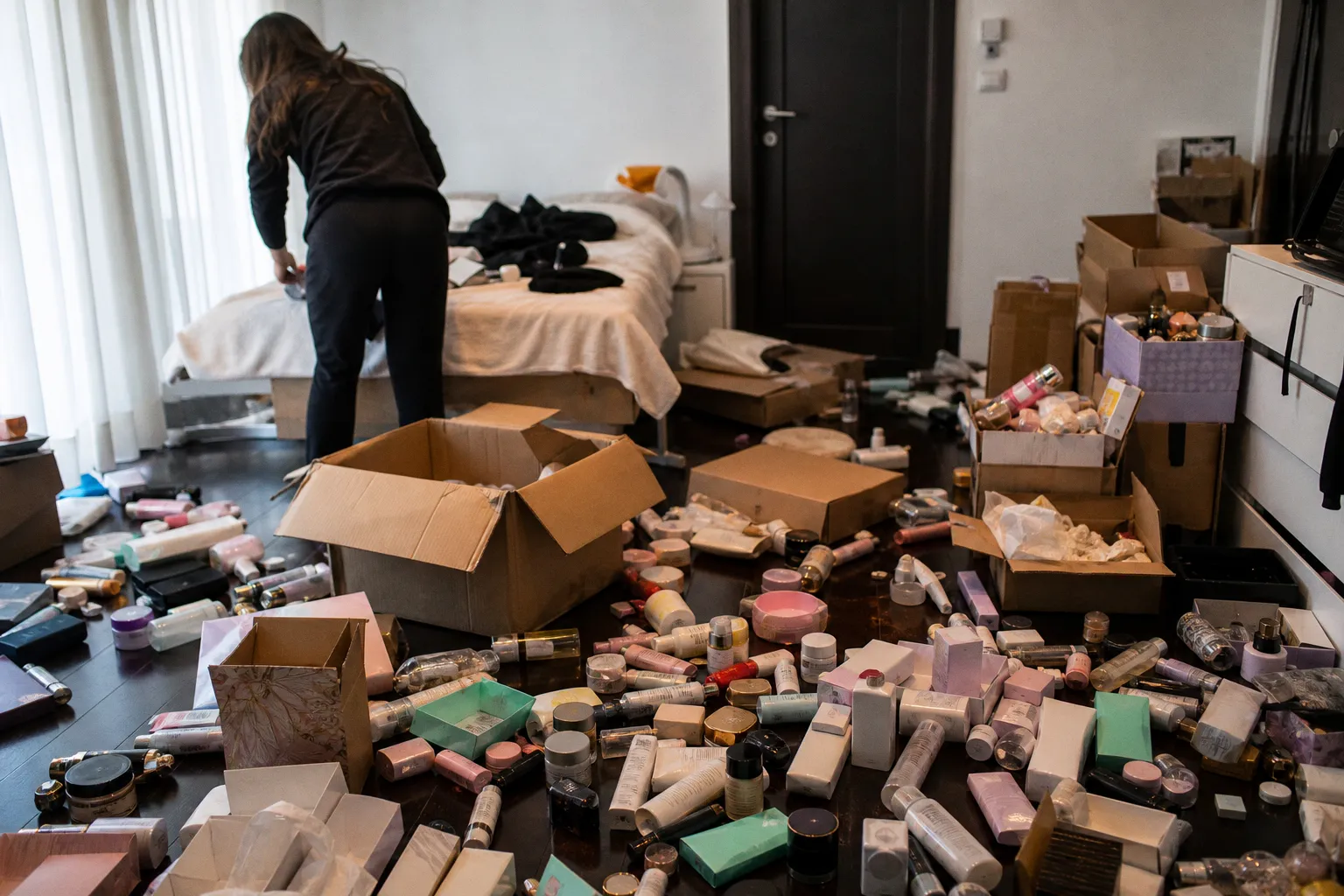
The liquidations piece sits in the feed as a title with no body text captured, so the specifics are unverifiable from this source alone. But the framing tracks with what the secondary beauty market has done for years: mid-tier brand closures and overstock inventory feed discount retailers, beauty liquidation sites, and resupply pipelines that subscription box curators tap into. When a brand shutters or clears excess, product lands in secondary channels at cents on the dollar. Curators with buyer relationships scoop it at fraction-of-MSRP pricing. The "retail value" printed on your subscription insert often does not reflect what the operator actually paid per unit - and it certainly isn't a guarantee of demand at full price.
What to verify on your next box
Cost-per-ounce survives marketing. A sub claiming "$180 retail value" assembled from liquidation-purchased product at a few dollars a unit is not $180 of utility - it's whatever fraction of MSRP the curation actually represents at the price point you paid. Cross-check the claimed value against product volume and actual full-size dimensions. If every item inside is travel-size or sample-size, the headline number collapses proportionally.
On sustainability claims, demand the certification tier, not the adjective. Home-compostable is a different specification than industrial-compostable; FSC is a paper-sourcing claim, not a decomposition claim. Without documented certification, the mailer is just fiber in a bin.
Net for buyers: the 2026 signals point to tighter packaging economics and a deeper liquidation pipeline feeding discount channels. That combination makes every beauty subscription more checkable than it was two years ago - if you actually run the numbers before the renewal hits.