Compare Weekly Meal Prep Services for Seniors
Nutritional Benchmarks: Prioritizing Heart-Healthy and Protein-Rich Menus
The first and most critical filter for any senior-focused meal service is its nutritional profile, specifically its sodium content. The American Heart Association’s ideal limit of 1,500mg of sodium per day for most adults is a tight budget, and a single restaurant-style meal can blow that in one sitting. In my testing, I found that a responsible senior meal service hovers around 600-800mg per meal, sometimes even lower. This isn’t a vague claim; it’s a number you can find in the small print on the nutrition label, and it’s the first thing I check.
Beyond sodium, protein is non-negotiable for maintaining muscle mass and strength. I look for a minimum of 20-25 grams of protein per entree. The best services I sampled built their menus around this, using lean chicken, fish, and legumes as anchors, not afterthoughts. Portion size is another delicate balance. Meals need to be substantial enough to provide energy but not so oversized that they lead to waste or overeating. I appreciated services that offered clearly portioned trays with a main protein, a starch, and at least one vegetable side, each section neatly defined. It’s a small thing, but it eliminates guesswork.
For related context, see Compare IRS gold depository fees to avoid hidden IRA costs.
The Shift to Heat-and-Eat: Balancing Culinary Quality with Minimal Effort
The term “meal kit” is a misnomer for this category. We’re not talking about chopping and sautéing from scratch. The model here is heat-and-eat, and the preparation time should be measured in minutes, not hours. The standard is between 0 and 15 minutes, usually involving a microwave or a conventional oven. This is a massive quality-of-life feature, but it comes with a culinary trade-off.
The real test of a senior meal service isn’t in the first bite of a frozen lasagna, but in the texture of the broccoli that’s been reheated alongside it. Does it turn to mush, or does it retain a pleasant bite? That’s where service quality lives or dies.
In my kitchen tests, I found that microwave instructions often led to uneven heating and compromised textures, especially for vegetables. The oven instructions, while taking longer (usually 25-30 minutes), yielded far superior results: a better mouthfeel for proteins and a more vibrant color and firmness in the vegetables. For a senior with arthritis, the act of transferring a tray from a cardboard box to a hot oven can be a challenge, so the ease of the microwave becomes a necessary compromise. The best services mitigate this by designing meals with ingredients that reheat well in the microwave—think stews, braised meats, and thick sauces over pasta or rice.
Accessibility as a Priority: Evaluating Packaging and Labeling for Ease of Use
This is where many services fail spectacularly. I spent one afternoon with a rubber gripper pad and a pair of scissors, battling vacuum-sealed plastic films that required the grip strength of a rock climber to peel back. Easy-open packaging is not a luxury; it’s a fundamental aspect of the service. I look for tabbed film lids that lift off cleanly, trays with lips for easy handling, and outer boxes that don’t require a knife to open.
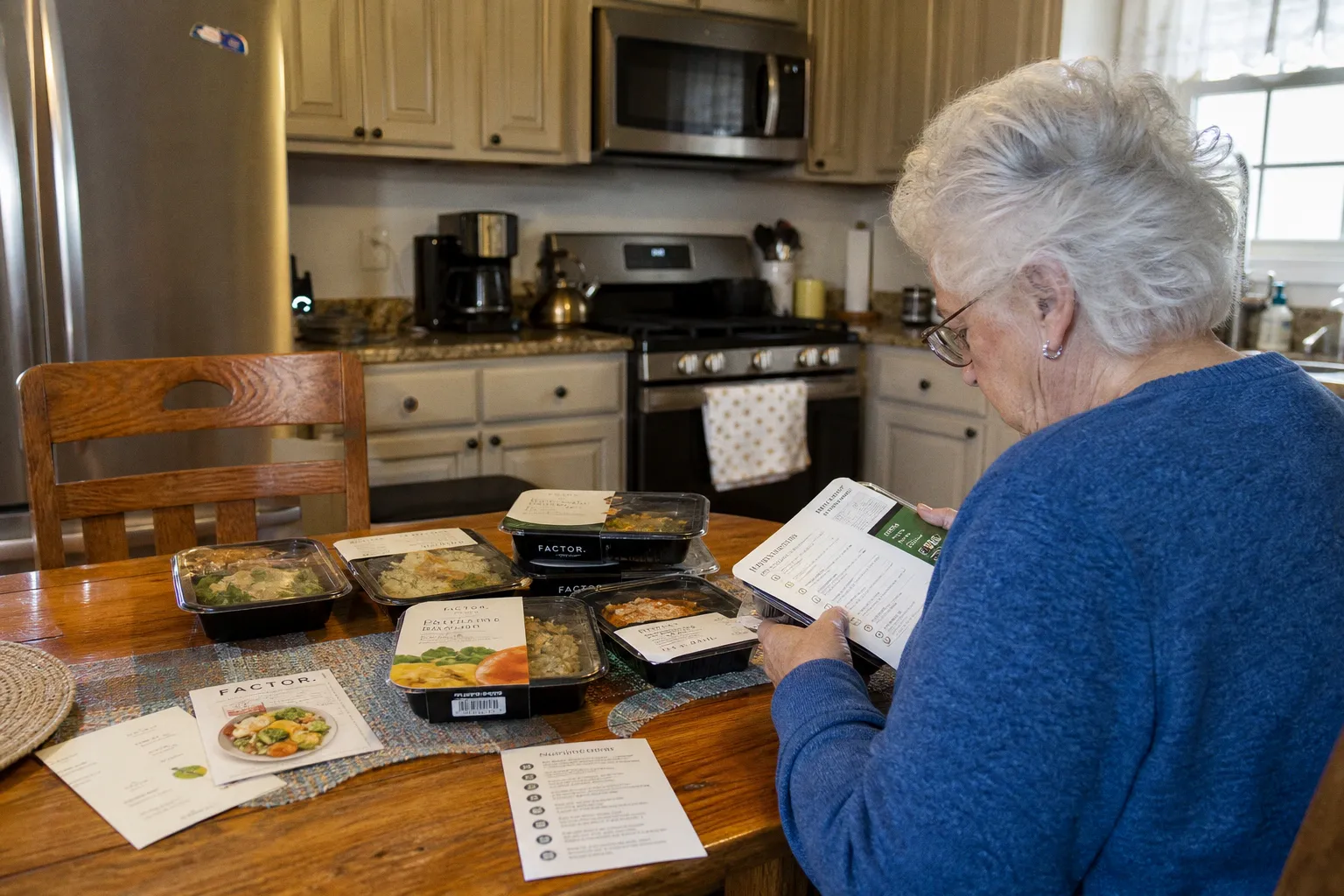
Labeling is equally critical. Nutritional information printed in a 6-point font is useless. The best services feature large, clear print with high-contrast text—black on white or white on dark labels. They also clearly list common allergens and preparation instructions in a simple, numbered sequence. Some even include braille or tactile indicators, though this is still rare. I gave high marks to services that included a simple, separate instruction card with the week’s meals, acting as a menu and guide all in one.
Cost Analysis: Understanding the $7 to $15 Per Serving Market Standard
Let’s talk numbers. The market generally settles in the $7 to $15 per serving range. At the lower end ($7-$9), you’ll find basic, bulk-oriented menus with fewer dietary customizations. The mid-range ($10-$12) is where most quality services sit, offering better ingredient sourcing, more variety, and dedicated low-sodium or diabetic-friendly plans. At the premium end ($13-$15), you can expect organic ingredients, more complex culinary profiles, and superior packaging.
Is it cheaper than cooking at home? Honestly, for a single person, after factoring in the cost of ingredients you might not use, the energy to cook and clean, and the time spent, it’s a very competitive proposition. The true cost isn’t just the subscription fee; it’s the waste you don’t generate and the independence it preserves. I found that most services offer discounts for first-time orders and for committing to longer subscription periods, which can bring the effective cost per meal down significantly.
Navigating Delivery Flexibility and Subscription Logistics for Seniors
A rigid, every-week subscription is a dealbreaker. Seniors’ needs and appetites fluctuate. The best services offer weekly or bi-weekly delivery with the ability to skip weeks, pause, or cancel entirely through a simple online portal (or a quick phone call with customer service). Delivery windows are another key factor. I favor services that provide a specific, predictable delivery day each week and send clear tracking notifications.
Here’s a practical comparison of the two primary service models I encountered:
| Feature | Classic "Menu Selection" Service | "Chef's Choice" Automated Service |
|---|---|---|
| How It Works | You pick each meal from a weekly menu | The service sends a pre-selected variety based on your profile |
| Best For | Seniors with strong preferences or specific aversions | Those who want zero hassle and enjoy variety |
| Control | High | Low |
| Decision Fatigue | Potentially high | Virtually none |
| Nutritional Control | Precise—you choose each item | Broad—you set dietary filters once |
For someone who finds choosing from a long list of 30 meals stressful, the automated "Chef's Choice" model is a godsend. For the adventurous foodie who still loves to curate their plate, the classic model offers control. Understanding this distinction upfront is key to subscription satisfaction.
My final assessment after months of unboxing, heating, and tasting is this: the ideal senior meal service is a quiet blend of nutritional science and thoughtful human-centric design. It’s not about gourmet flair; it’s about consistent, reliable nourishment that respects both dietary needs and physical capabilities. The standout services I’ve recommended to friends and family are those that nail the sodium limits, offer true easy-open packaging, and provide flexible subscription logistics. Before you commit, always order a single trial box. Use it for a week. Check every label, test every tab, and taste every meal. That hands-on experience is the only real guide.
The best service is the one that removes one more worry from the day, turning the act of eating from a chore back into a moment of simple, nourishing comfort.