Fantasy book subscription box: is the exclusive value worth it?

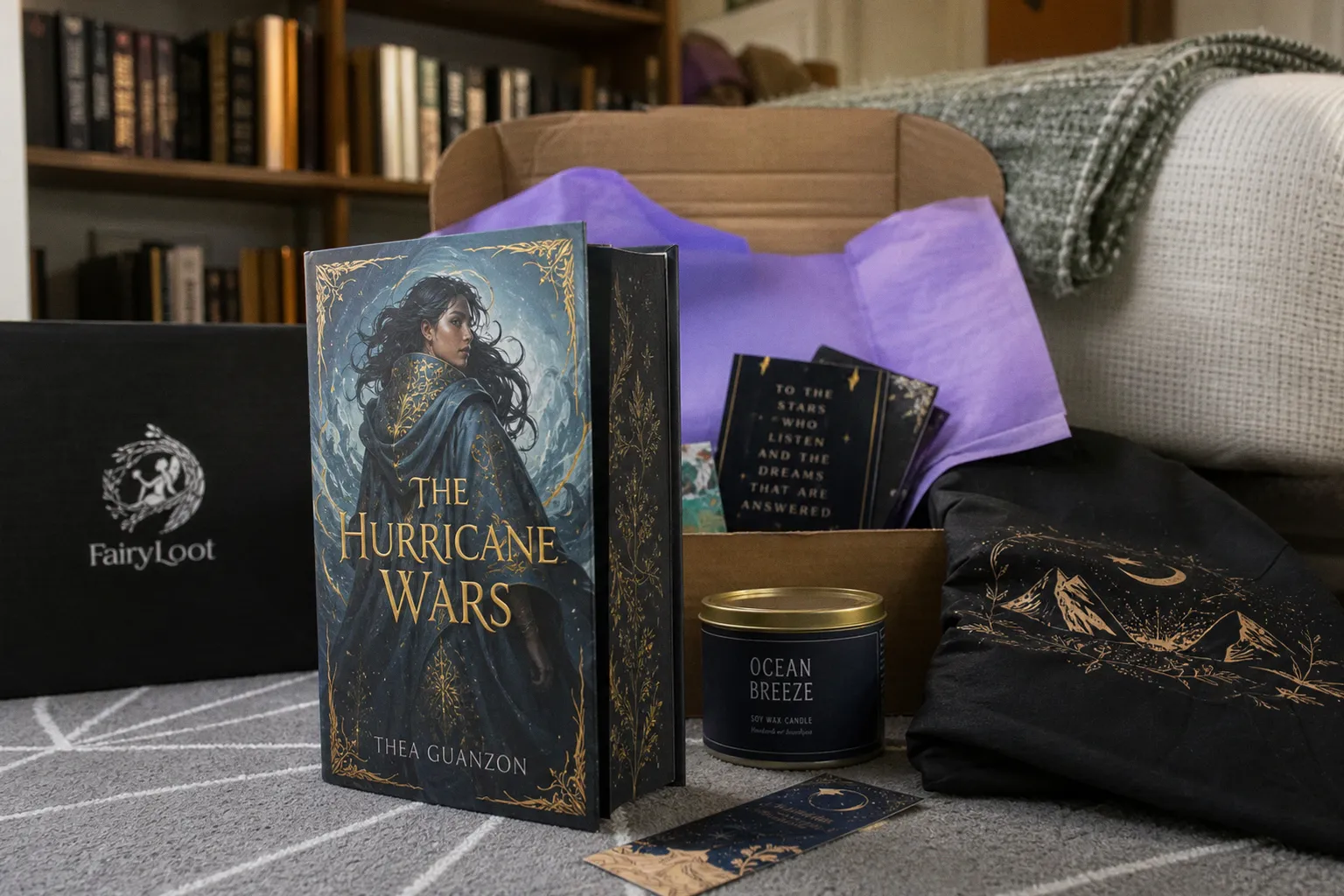
The sprayed edges glowed under my desk lamp, the foiling caught the light at a sharp angle, and tucked into the back cover was a signed bookplate. It felt like Christmas morning in March. But six months later, after watching three different "limited" editions get reprinted by publishers and watching the secondary market prices crater, I started asking a harder question: am I paying $55 a month for a reading experience, or am I paying for the idea of exclusivity? That question is what every fantasy book subscription box review eventually has to confront, and it's why so many subscribers quietly cancel after the first six months.
The fantasy subscription market has matured into something genuinely impressive on the aesthetic side, but also something structurally fragile on the financial side. Exclusive editions with stenciled edges, foiled hardcovers, and signed or tipped-in pages are now standard fare from the major players, and the monthly fantasy book club has become a rite of passage for serious readers who want their shelves to look as curated as their TBR piles. The problem is that "exclusive" no longer means what it used to mean, and the resale math that justified early adoption has gotten a lot shakier.
The Economics of Exclusive Editions: Beyond the Cover Price
Let's talk actual numbers, because the fantasy book subscription box market lives and dies on what you can see on a spreadsheet, even if I never want to look at one for fun. A standard new hardcover fantasy release retails for $28 to $35. The monthly fantasy book club tier from FairyLoot or Illumicrate runs $45 to $65 per box, plus shipping that adds another $10 to $23 depending on whether you're in the continental US, Canada, or the UK. So you're paying roughly $65 to $85 all-in for a single book, three to five bookish goodies, and the promise that this particular edition won't be sold in regular bookstores.
The goodies are real, by the way. I'm not dismissing the enamel pins, the character art prints, the scented candles, the custom jewelry, or the themed apparel items that arrive in the average "full" subscription tier. In my unboxings, I've gotten genuinely beautiful items: a velvet pouch containing a House of the Dragon pin, a foiled art print I actually framed, a leather bookmark that has survived daily use for eighteen months. The build quality on these extras is usually solid, and the curation is thoughtful enough that you'll use at least one or two items per box. But the central object, the book itself, is where the economics either work or fall apart.
Exclusive editions aren't bought, they're joined — and like any membership, the cost only makes sense if you understand what you're paying for.
The premium you're paying over the standard hardcover runs anywhere from $30 to $50, and in exchange you get sprayed edges, foil stamping, an alternate cover, and sometimes a signed bookplate or tip-in page. The visual difference is substantial. A FairyLoot or Illumicrate exclusive on a shelf pops in a way that a standard edition never does. If you're a collector who reads once and shelves forever, that aesthetic lift has tangible value. If you're a reader who rereads, dog-ears pages, or hauls books around in a tote bag, the sprayed edges will start showing wear within months and the resale value will track accordingly.
Navigating the Waitlist: Supply Constraints and Subscription Tiers
Here's the part nobody puts in the marketing copy: the most popular fantasy book subscription boxes have waitlists, and those waitlists are long. For the "book-only" tiers at FairyLoot, Illumicrate, and a handful of competitors like OwlCrate and Bookish Box, expect to wait anywhere from two to ten months before your first box ships. For specialized tiers — Epic Fantasy, romantasy-only, adult fantasy box comparison picks — the wait can stretch even longer because the production runs are smaller and the churn rate is lower.
This is structurally interesting. The waitlist serves two functions for the publisher: it caps supply, which protects the "limited" branding, and it creates urgency, which drives social media engagement. Both functions work in the seller's favor. From the subscriber's perspective, though, a waitlist means you're committing money before you know what book you'll actually receive. The monthly theme and genre hints get dropped on Instagram four to six weeks before shipping, but if you're eight months deep on a waitlist and the announced pick doesn't interest you, your skip policy becomes the most important clause in your subscription agreement.
The waitlist also reveals something about demand that the box companies themselves probably didn't anticipate in 2019. The YA and adult fantasy market has grown enormously, and the subscription box model has captured a meaningful slice of readers who want curated discovery plus collectible presentation. That's healthy market behavior. But the waitlists have also created a secondary economy of "box flipping," where people subscribe specifically to grab the exclusive edition and resell it, treating the subscription fee as a cost of acquisition rather than a reading expense. If you're subscribing for the reading experience, you're competing for inventory against people whose resale math is a lot more cynical than yours.
The Volatility of Resale Value in a Saturated Market
This is where I have to be most honest with you, because I watched this happen in real time over 2024 and 2025. The resale market for fantasy subscription box exclusives is volatile in a way that makes cryptocurrency look stable. A FairyLoot exclusive that sold for $180 on eBay in March 2024 might be listed for $60 six months later because the publisher decided to do a wider trade paperback run with similar sprayed edges. The Illumicrate editions from the same period saw similar drops once readers realized the secondary market was flooded with copies from skip-heavy subscribers offloading their boxes.
The resale math, when it works, looks like this: you pay $75 all-in for a box, the exclusive book is the thing you actually wanted, and if you sell the three to five goodies as a bundle on eBay or Mercari, you recoup maybe $15 to $25 of your cost. If the book itself has aftermarket demand, you might sell it for $50 to $150 depending on the author, the print run, and whether it's truly limited or merely exclusive. Net cost for the book: somewhere between free and $40, which sounds great until you realize the resale market is a second job you didn't sign up for.
A signed bookplate is not a signed book, a "limited" edition is not always limited, and a subscription is not an investment account.
The publisher reprinting behavior is the single biggest variable you cannot control. When a major fantasy title gets an exclusive sprayed-edge edition through a subscription box and that book becomes a bestseller, the publisher will almost always do a second printing with the same aesthetic treatment for the general market. That's good for readers who missed out and bad for collectors who paid a premium thinking their copy would stay scarce. The "exclusive" label technically remains accurate — the subscription edition may have been the first printing with that treatment — but functionally, the resale premium evaporates.
If you're subscribing to fantasy book boxes with the explicit goal of building a collection that appreciates in value, I have to tell you that the historical data doesn't support it. Some editions do hold value or even climb, particularly if the author becomes a phenomenon after the box ships, but treating a $65 monthly subscription as a financial strategy is how you end up with a storage unit full of enamel pins and a sunk-cost justification for every renewal.
Quality Control and the Cost of Aesthetic Perfection
Now for the part that actually shows up on your doorstep. The sprayed edges that make a fantasy book subscription box so visually striking are also the single biggest source of quality control complaints. I've personally received boxes where the edges were smudged, where the spray coverage was uneven, where the foil stamping had visible scratches from the manufacturing process, and where the book corners were dinged in transit. At $65 a month, these defects register.
The structural issue is that sprayed edges, stenciled designs, and foiled covers require additional handling and finishing beyond a standard hardcover. Every additional step is an opportunity for a defect. Most of the major box companies have gotten better at this over the past two years — Illumicrate in particular has tightened up its packaging — but the defect rate on sprayed-edge editions across the industry is meaningfully higher than on standard hardcovers, and the boxes arrive with minimal internal protection. There's usually tissue paper around the book and maybe a cardboard insert, but no plastic shell, no rigid mailer, no foam corners.
What you can do as a subscriber: take photos of any defects the day you unbox and contact customer service immediately. Most companies will offer a partial refund, a replacement bookplate, or a credit toward a future box. The squeaky wheel gets the signed bookmark. The quiet subscriber who just accepts a damaged copy subsidizes everyone else's refund. This isn't cynical — it's just how premium subscription services operate, and the box companies know that word-of-mouth from a dissatisfied customer costs them more than a $15 credit.
Strategic Flexibility: Understanding Skip Policies and Commitment
The skip policy is your single most important lever, and the variation between companies is significant. Illumicrate allows up to six skips per year, which means you can opt out of any month where the announced pick doesn't interest you. FairyLoot typically allows four skips. OwlCrate sits in the same range. These aren't generous policies — they're survival mechanisms for the subscriber, because committing to twelve monthly boxes at $65 each means you're spending $780 a year on books you might not want to read.
The skip policy also reveals something about the box company's confidence in its own curation. A box that allowed unlimited skips would be admitting that some monthly picks won't appeal to every subscriber, which is true but bad marketing. A box that allowed zero skips would be punishing subscribers for the inevitable mismatch between the announced theme and personal taste. The four-to-six skip range is the negotiated middle, and it's the range I'd insist on before committing to any fantasy book subscription box.
| Subscription Box Comparison | Typical Monthly Cost (USD) | US/Canada Shipping | Skips Per Year | Typical Waitlist |
|---|---|---|---|---|
| FairyLoot (Full Box) | $45 – $65 | $12 – $20 | 4 | 2 – 8 months |
| Illumicrate (Standard) | $50 – $65 | $10 – $22 | 6 | 3 – 10 months |
| OwlCrate (Full Box) | $40 – $55 | $13 – $23 | 4 | 4 – 9 months |
| Bookish Box (Mixed) | $35 – $50 | $10 – $18 | Varies | 1 – 4 months |
The other commitment lever is the subscription tier itself. Most fantasy book boxes offer multiple tiers: a "book-only" option that includes the exclusive edition plus maybe one or two small extras, and a "full" option that adds three to five bookish goodies. The book-only tier is usually $20 to $30 cheaper, and if you're subscribing primarily for the exclusive edition rather than the curation experience, it's the better value. The full tier makes sense if you genuinely use the goodies — if you're the kind of reader who will wear the themed apparel, display the art print, or carry the enamel pin on a daily basis. If the goodies end up in a drawer, you're paying $30 a month for storage.
One more thing worth flagging: cancellation policies are tighter than you'd expect. Most fantasy book subscription boxes require you to cancel before a specific cutoff date each month, usually 5 to 7 days before the billing cycle closes. Miss that window and you're locked in for another box. Set a calendar reminder. The auto-renewal is the silent profit center of the entire subscription industry, and fantasy book boxes are no exception.
The Verdict: When the Fantasy Book Subscription Box Actually Works
Here's where I land after two years of unboxings, three FairyLoot boxes, two Illumicrate boxes, one OwlCrate, and enough enamel pins to fill a corkboard. The fantasy book subscription box is worth the monthly cost if three conditions are met: you're genuinely excited by the specific picks the box is curating, you have a skip policy that lets you opt out of mismatches without penalty, and you're treating the subscription as a reading and aesthetics expense, not an investment.
If you read widely in the fantasy genre, if you appreciate the sprayed-edge aesthetic enough to keep the books in good condition, and if you're willing to sell or gift the extras that don't fit your style, the math works out to roughly the cost of a standard hardcover per month plus a small premium for the exclusive treatment. That's defensible. The experience of unboxing a beautifully designed edition with thoughtful goodies is genuinely pleasurable, and if you're the kind of reader who treats books as objects as well as stories, the tactile and visual upgrade is worth the upcharge.
If you're subscribing because you think the exclusive editions will appreciate in value, or because you're hoping to flip boxes for profit, or because you're chasing the social media hype around unboxing videos, the math doesn't work and probably never will. The resale market is too volatile, the print runs are too unpredictable, and the skip-and-resell arbitrage is already saturated by people who are better at it than you are. Treat the subscription as a hobby expense, not an investment, and you'll enjoy it. Treat it as a financial strategy, and you'll be disappointed.
The monthly fantasy book club remains one of the best ways to discover new authors, expand your reading into subgenres you wouldn't have picked up on your own, and own editions that genuinely stand out on a shelf. Just don't confuse the experience of opening the box with the value of what's inside. The thrill fades by month three. The books, if you chose well, stay on your shelf for years.
FAQ
Are fantasy book subscription boxes a good financial investment?
How much does a typical fantasy book subscription box cost?
What should I do if my subscription box arrives damaged?
Can I skip months if I don't like the book selection?
Why is there a waitlist for these subscription boxes?
 Lifestyle & Geek BoxesChoose the Best Book Subscription Club for Fantasy Lovers
 Lifestyle & Geek BoxesWhich book subscription box fits your reading style?
 Lifestyle & Geek BoxesSelf-care subscription box criteria: what to buy and why
 Lifestyle & Geek BoxesAdult book subscription box test: our methodology and findings