Match Children's Book Clubs to Your Kid's Reading Level
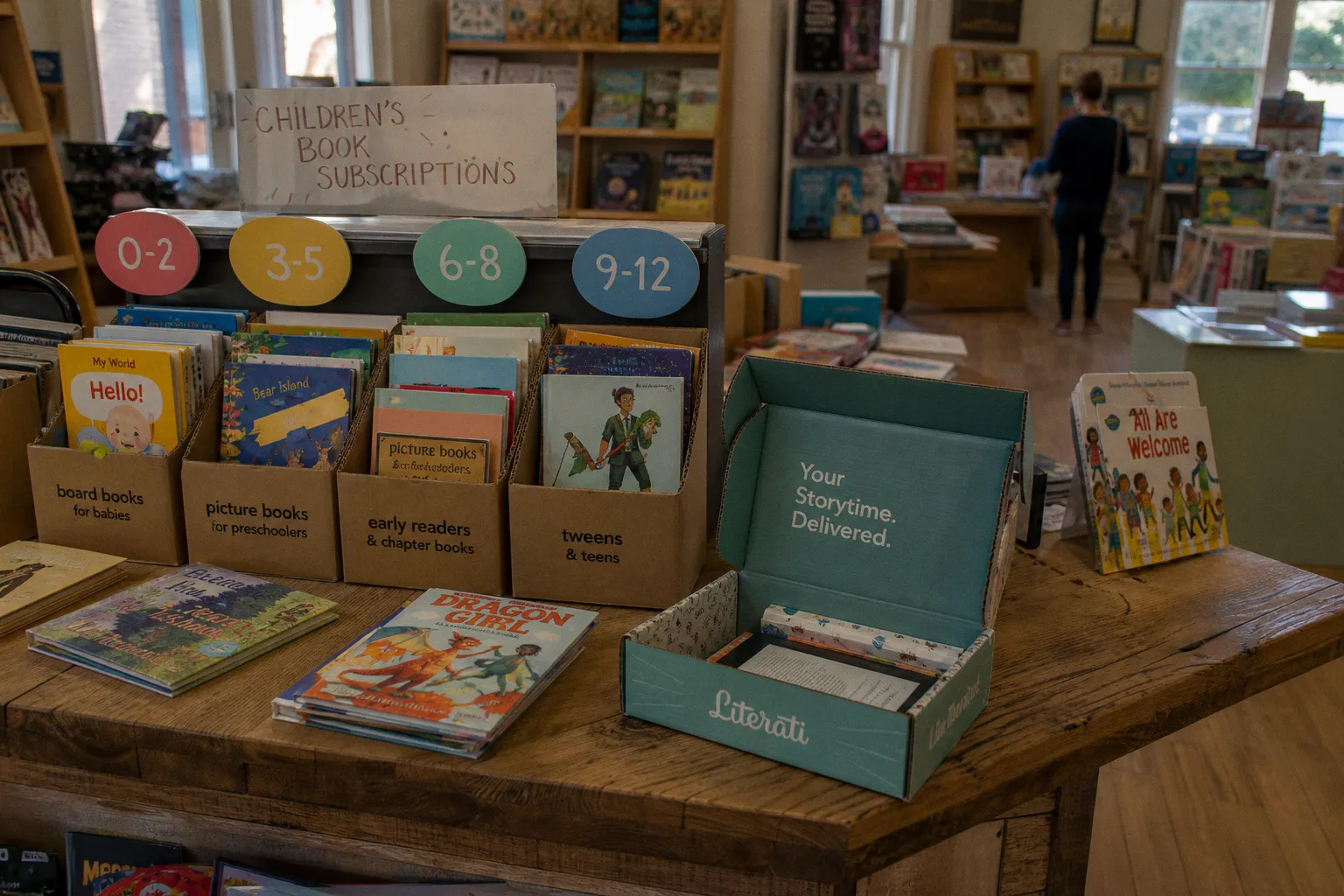
The core mistake is simple. Parents try to match children’s book clubs to a kid’s reading level by age band alone. Most services sell the same basic ladder: 0–2, 3–5, 6–8, 9–12. That is convenient for checkout. It is crude for literacy. A six-year-old can be decoding early readers, memorizing picture books, or burning through short chapter series. Those are three different products, not one customer segment.
Age is a shipping label. Reading level is the asset you are actually buying against.
The better audit starts with three inputs: what the child can read alone, what they can understand when read to, and what they will voluntarily pick up without negotiation. A good book subscription box supports that spread. A weak one hides behind “curated for age” and sends whatever clears its warehouse math.
For related context, see UNICEF Reports 20 Million Children Using AI for Learning and Advice.
Why chronological age is an unreliable metric for literacy
Age ranges are not useless. They are a rough safety and format filter. A board book for a toddler needs thick pages because the product must survive chewing, bending, and floor impact. A middle-grade novel assumes longer attention span and more text density. Fine.
But age does not tell you whether a child can decode consonant blends, follow a multi-chapter plot, infer a character’s motive, or handle a book with sparse illustrations. Those are the real operating specs.
Most children’s book subscriptions categorize by bands such as 0–2, 3–5, 6–8, and 9–12. That creates clean merchandising. It also creates bad matches at the edges:
- A four-year-old who listens to long read-alouds may be bored by basic picture books with one sentence per page.
- A seven-year-old who is still building fluency may stall on chapter books with dense pages and no visual breaks.
- A nine-year-old who reads above grade level may receive “age-appropriate” books that are technically correct and commercially worthless to that child.
- A toddler who destroys paperbacks needs board books even if the story content skews younger.
The liability is not just boredom. A poor match changes the economics of the box. If a monthly subscription sends four books and two are unusable, the effective cost per usable book doubles. A $28 shipment becomes $14 per useful title before tax. That is not a deal. That is subsidized clutter.
A proper evaluation separates four levels of reading fit:
| Fit variable | What it measures | Why it matters in a subscription |
|---|---|---|
| Decoding level | What the child can read aloud with limited help | Prevents boxes from overshooting into frustration |
| Comprehension level | What the child can understand and discuss | Keeps read-aloud books from being too thin |
| Interest level | What the child will choose without pressure | Determines actual usage, not theoretical value |
| Format tolerance | Board book, picture book, early reader, chapter book | Prevents physical and structural mismatch |
Age sits behind all four. It does not replace them.
This is where many parents overpay. They compare MSRP against the subscription price and stop there. That is only the first calculation. The real test is usable retail value: the portion of the box that fits the child now. A $16 hardcover has zero functional value if it is two reading stages off and never gets opened.
Decoding subscription tiers: from board books to chapter series
Book clubs tend to package childhood reading into product tiers. The labels vary, but the underlying formats are stable: board books, picture books, early readers, chapter books, and middle-grade titles. The trick is to buy the format that matches the child’s current use case, not the tier that sounds more advanced.
Board books: durable, low text, high repeat use
Board books are built for babies and toddlers. Thick pages. Rounded corners. Short text. High reread tolerance. If the child is 0–2, this is usually the correct lane. It may also be correct for older toddlers who still rip paper pages or engage with books physically.
The value metric here is not literary depth. It is survival rate plus repetition. A board book that gets read 40 times has a lower cost per use than a fancy picture book that lasts one afternoon before page damage.
Watch for filler. Some subscriptions treat board books as low-cost units and pad the box with titles that look acceptable but have thin language, generic images, or no reread pull. The MSRP may be intact. The developmental value may be weak.
Picture books: read-aloud value with visual support
Picture books typically serve preschoolers and early elementary children, though strong ones work across ages. They support vocabulary, story structure, inference, humor, and visual literacy. For children who are not yet independent readers, picture books can still be the highest-value tier.
This is where age-based selling gets sloppy. A 3–5 box may assume short attention span. Some children in that band can handle longer narratives. Others need simple sequencing and predictable language. The product category is too wide for a blind subscription unless the service asks real preference questions or allows changes.
Good picture-book curation should account for:
- Text length per page, not just total page count.
- Vocabulary density.
- Narrative complexity.
- Illustration dependence.
- Reread potential.
- Whether the book works for bedtime, classroom-style discussion, or independent browsing.
Those are not cosmetic details. They determine whether the book gets used.
Early readers: controlled text with a narrow fit window
Early readers are high-risk subscription items. The stage is short, uneven, and sensitive. A child may be able to read one Level 1 series and fail with another because publishers use different leveling systems. A box that says “early reader” without explaining the type of text, sentence length, or phonics load is asking the buyer to accept inventory risk.
This is also the tier where parents most often mistake “harder” for “better.” Harder is not better if fluency collapses. A book that requires adult rescue on every page is no longer independent reading. It is instruction. Subscription boxes should not be sold as replacements for formal reading instruction or tutoring.
If a child is learning to read, the subscription must be adjustable. Monthly frequency can be useful only if the service can move down, up, or sideways quickly. Otherwise the box keeps shipping misfit books while the child’s skill profile changes week by week.
Chapter books and middle-grade: stamina becomes the cost center
Chapter books add a new variable: stamina. A child may decode the words but lack the patience for 120 pages of small type. That is not a failure. It is a mismatch between cognitive ability and reading endurance.
For school-aged children, look past the age band and inspect the structure:
- Page count.
- Font size.
- Chapter length.
- Illustration frequency.
- Series continuity.
- Subject matter.
- Emotional maturity of themes.
A 9–12 subscription can be a good value when the child has stable preferences and enough reading volume to absorb monthly shipments. It is a bad value when books accumulate faster than they are read. Quarterly delivery may be more rational than monthly delivery for children who read slowly or prefer to reread favorites.
Personalization is not a perk. It is downside protection.
Some book clubs, including services such as Literati and Bookroo, offer personalization or level-switching. That matters. Not because an algorithm can perfectly map a child’s reading profile. The proprietary matching systems behind most services are rarely disclosed in detail. Treat them as merchandising tools, not clinical assessments.
The practical value is flexibility. If the first box misses, can you correct the tier before another billing cycle? Can you move from picture books to early readers without canceling? Can you change interest categories? Can you skip a month when the unread stack is high?
A subscription that lets you adjust level has a lower risk of waste. A rigid one pushes the risk onto the parent.
The best personalization feature is not a quiz. It is the ability to fix a bad match without paying for two more boxes.
Here is the blunt comparison:
| Feature | Low-value version | High-value version |
|---|---|---|
| Age selection | One static age band at signup | Level can be changed as skills shift |
| Interest curation | Broad tags like “animals” or “adventure” | Multiple preference inputs with update options |
| Book count | More books by default | Choice between 1–4 books based on reading volume |
| Frequency | Monthly only | Monthly or quarterly options |
| Returns or swaps | No practical remedy for misses | Clear exchange, skip, or adjustment path |
| Educational add-ons | Generic printables | Discussion prompts tied to the actual book |
A service does not need every feature. It does need enough control points to prevent recurring waste. The higher the monthly price, the less tolerance there should be for vague matching.
Parents should also separate personalization from novelty. A box may feel customized because it uses the child’s name, asks for a birthday, or prints a polished insert. That is surface treatment. Real personalization changes the books.
The math: retail value is not the same as reading value
Subscription boxes love MSRP math. It is easy to sell. Three books with a combined cover price of $48 shipped for $32 looks like a $16 spread. That spread is only meaningful if the titles are wanted, appropriate, and not easily bought cheaper elsewhere.
Children’s books are vulnerable to price distortion. Hardcovers often carry high list prices. Paperbacks discount heavily. Used copies are abundant. Library access competes with ownership. A subscription has to justify itself on curation, convenience, and fit, not just cover-price arbitrage.
A basic audit should include five numbers:
1. Subscription cost per shipment. Include shipping and tax if charged. A $24.95 box is not $24.95 if checkout adds fees.
2. Book count. Most children’s book boxes ship somewhere around 1 to 4 books per box. More is not automatically better.
3. Usable titles. Count only books that match the child’s current level or a near-term read-aloud use.
4. Replacement cost. Estimate what you would reasonably pay for those same titles through normal retail, sales, or used channels.
5. Use rate. Track how many books are read within 30 to 60 days.
The result is not theoretical. If a quarterly box ships two well-matched books that get read repeatedly, it can beat a monthly box that ships four random titles. Lower volume can produce higher value.
A simple example:
| Box result | Sticker view | Functional view |
|---|---|---|
| 4 books, $52 combined MSRP, $32 subscription | Looks like $20 surplus value | If only 2 books fit, cost is $16 per usable book |
| 2 books, $30 combined MSRP, $24 subscription | Looks like $6 surplus value | If both fit and get read, cost is $12 per usable book |
| 1 premium book, $18 MSRP, $18 subscription | No visible discount | Can still be rational if curation solves a real selection problem |
This is why “deal” language needs pressure testing. A book club can beat retail on paper and still lose on household utility.
For adjacent parenting and leisure reading, I would treat broad lifestyle resources such as Amajing World as background reading, not as a substitute for checking the subscription mechanics. The purchase decision still comes down to fit, flexibility, and cost per usable book.
Supplemental materials: useful when tied to comprehension, filler when generic
Many educational book clubs include activity guides, discussion questions, stickers, crafts, or reading prompts. These can add value. They can also function as cheap padding.
The distinction is whether the material improves engagement with the specific book. A discussion card that asks about the main character’s choice has a purpose. A generic coloring sheet with a logo is filler. A craft that connects to a nonfiction topic can support comprehension. A random paper activity increases box volume, not value.
Supplemental materials are most useful in three cases:
- Preschool and early elementary read-alouds. Discussion prompts help adults build vocabulary, sequencing, and prediction without turning the book into homework.
- Reluctant readers. A short activity can lower the barrier to starting, especially when the topic is already interesting to the child.
- Homeschooling or enrichment use. A guide can save planning time if it is specific enough to support a lesson.
They are least useful when they create adult labor. If the box requires cutting, setup, cleanup, and explanation before the child gets any benefit, that cost belongs in the calculation. Parent time is not free. It is just rarely itemized.
This is where children’s book clubs overlap with homeschooling activity kits and craft boxes for kids. The more the box promises education beyond reading, the more scrutiny it deserves. A book subscription should not quietly become a low-grade craft subscription with a paperback attached.
Good supplemental materials have visible alignment:
| Add-on type | Adds real value when… | Looks like filler when… |
|---|---|---|
| Discussion questions | They reference the actual story and build comprehension | They are generic prompts usable with any book |
| Activity guide | It extends a theme without heavy prep | It requires supplies not included |
| Stickers or rewards | They support reading tracking for a motivated child | They are just low-cost box decoration |
| Parent notes | They explain level, vocabulary, or usage | They repeat marketing copy |
| Bookplates or labels | They support ownership for a child who values that | They inflate perceived personalization |
The worst version is the “educational” insert that says nothing measurable. If the box claims literacy support, it should show the mechanism: vocabulary, comprehension, phonics practice, discussion, fluency, or topic knowledge. If it cannot name the lever, the claim is soft.
How to assess your child before choosing a subscription
You do not need a formal reading assessment to choose a better box. You need a clean observation window. Ten minutes is enough to avoid the most expensive mismatch.
Start with books already in the home, school bag, or library stack. Look at what happens without pressure.
1. Ask the child to pick a book they can read alone. Not the hardest book. Not the most impressive one. The one they would actually read.
2. Listen to one page. Count friction. Frequent guessing, skipped words, or visible fatigue means the level is too high for independent reading.
3. Ask one concrete question. “What happened first?” or “Why did that character do that?” This separates word calling from comprehension.
4. Offer a read-aloud book one level higher. Many children can understand more than they can decode. Subscriptions should account for both.
5. Check interest, not just ability. If the child can read dinosaur nonfiction but only wants animal rescue stories, buy against the use case.
6. Track completion. A book started and abandoned still tells you something. It may be topic mismatch, length mismatch, or format mismatch.
7. Reassess after one shipment. Treat the first box as a sample, not proof that the subscription works.
For a child between levels, choose the service with the better adjustment policy. Not the prettier branding. Not the largest claimed retail value. Level-switching is the asset.
There is also a difference between independent reading and family reading. A child may need early readers for solo practice but enjoy sophisticated picture books at bedtime. A smart subscription can serve one of those jobs. It rarely serves both perfectly in the same box unless the service lets you specify the goal.
That goal should be explicit:
- Build independent reading fluency.
- Supply read-aloud books.
- Discover new authors.
- Support a school topic.
- Feed a high-volume reader.
- Reduce parent selection time.
- Rotate toddler books without buying random toys.
Different goals justify different subscriptions. A high-volume reader needs throughput and series quality. A toddler needs durable formats and reread value. A reluctant reader needs topic precision and low intimidation. A family doing enrichment may value guides and discussion prompts.
Adjusting the subscription as skills evolve
Children’s reading levels move unevenly. A subscription that fit in September may be wrong by January. That is normal. The box has to keep up or it becomes an automatic billing leak.
The adjustment schedule should be tighter for younger and emerging readers. Monthly shipments are common, but monthly billing can outrun actual development and reading volume. Quarterly delivery is often cleaner for families that want curation without accumulation.
Use a simple trigger system:
| Trigger | What it means | Subscription move |
|---|---|---|
| Child finishes every book quickly and asks for more | Volume or difficulty may be too low | Increase level or book count |
| Child avoids the box books but reads other books | Interest mismatch | Change themes or service |
| Adult must help on nearly every page | Level too high for independent reading | Move down or switch to read-aloud goal |
| Books remain unread after two shipments | Frequency too high or curation poor | Pause, skip, or cancel |
| Child rereads favorites but ignores new titles | Series or topic preference is strong | Choose a service with tighter preference controls |
Do not let sunk cost run the decision. A subscription is not a curriculum. It is a procurement channel. If it stops procuring the right books, stop paying.
The hardest call is the advanced reader. Parents often move up by age band and discover content problems. A child may decode books intended for older readers without being ready for the themes. This is where human curation matters more than algorithmic matching. A service that understands “high reading ability, age-appropriate content” has more value than one that blindly escalates to older categories.
The opposite case also needs protection. A child who needs extra support should not be pushed into harder books because the birthday changed. Book clubs that allow level-switching are better suited for this child than rigid age-band subscriptions. The goal is reading momentum, not cosmetic advancement.
Final verdict: buy the flexible box, skip the rigid age band
To match children’s book clubs to your kid’s reading level, ignore the sales funnel’s favorite shortcut. Age is a starting filter. It is not the buying decision.
Buy a children’s book subscription if it does three things well: sends the correct format, allows level or preference changes, and produces books your child actually uses. Pay extra only when curation reduces waste or saves real selection time.
Skip any service that hides behind broad age bands, vague “personalized” claims, or inflated MSRP spreads. Wait for a promo code if the first box is effectively a trial and the adjustment policy is weak.
The clean verdict: choose flexibility over volume. A smaller box with two well-matched books beats a larger shipment with four depreciating assets. Reading value is not measured by how full the box looks on arrival. It is measured by what gets opened after the packaging is gone.
FAQ
Why is age an unreliable way to choose a book subscription?
How can I calculate the real value of a book subscription box?
What should I look for in a book subscription to avoid wasting money?
Are supplemental materials like stickers and activity sheets worth it?
How do I know if a book subscription level is wrong for my child?
 Kids & Education BoxesKids subscription box guide: what to buy and what to skip
 Beauty & Fashion BoxesCompare Clean Beauty Boxes Under $40 for Sensitive Skin
 I’m a beauty editor — these 41+ Prime Day beauty deals are actually worth it
 9 summer beauty bundles that offer makeup and skincare worth hundreds of pounds