Snack subscription box: variety verdict and top picks
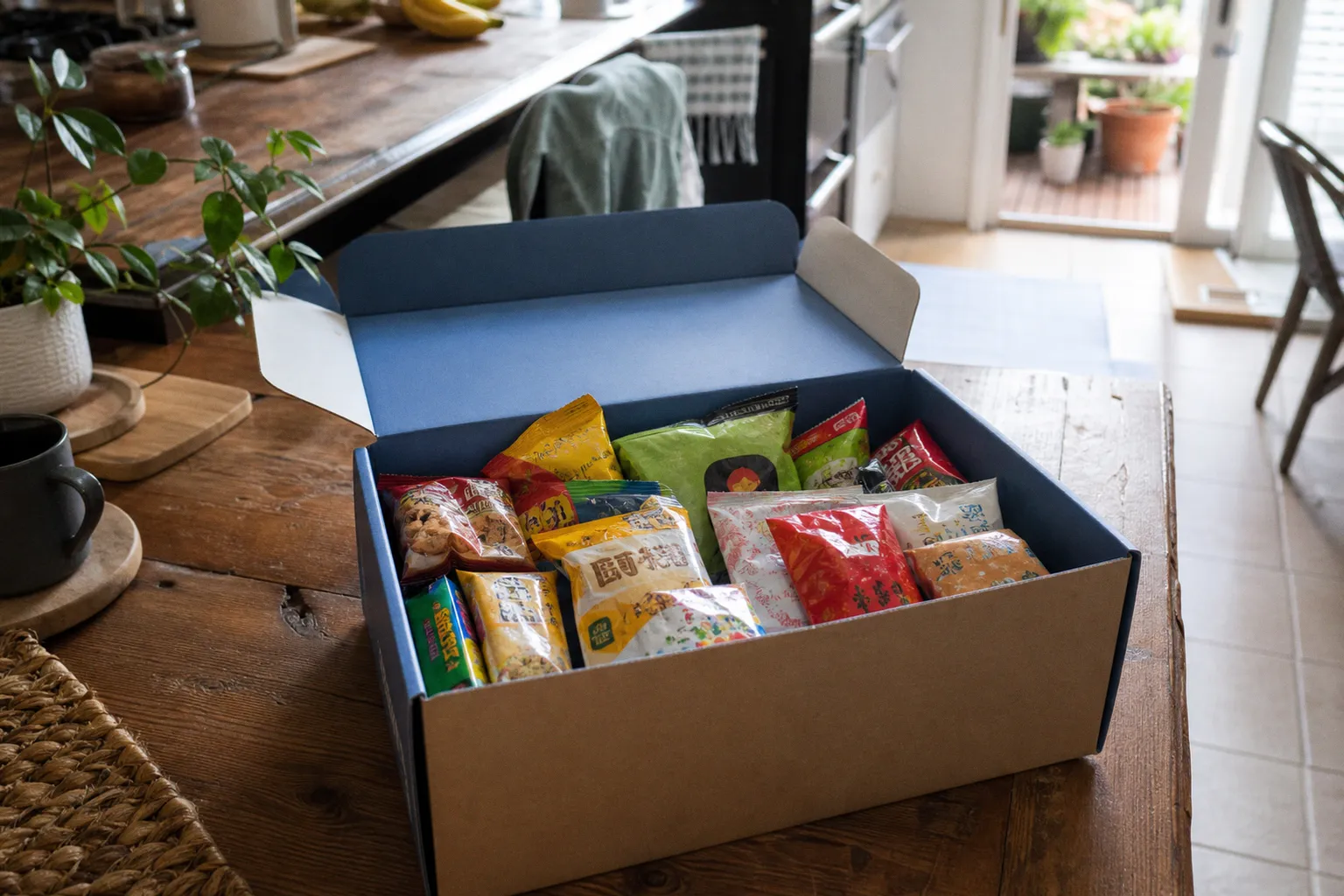
The marketing promise is usually much larger—global discovery, better-for-you choices, “premium” surprises—but the useful question is simpler: how many snacks will actually show up, how much choice does that buy, and how much label-reading will it create?
I compared the current advertised formats, item counts, starting prices, dietary positioning, and subscription terms for the major players. The short version: Universal Yums is the cleanest low-cost entry into international snacking; Bokksu is for people who want a serious Japan-specific curation rather than random novelty; UrthBox gives the most explicit diet-plan structure but requires the most careful allergen reading; and SnackCrate makes more sense when a larger household will divide the box before it becomes cupboard clutter.
This is not a ranking based on “best taste.” Snack taste is personal, monthly assortments change, and an item count does not tell us serving size, freshness, or whether every package will survive a backpack. It is a practical comparison of what the subscription fee is buying.
The economics of snack curation: count the usable snacks, not the excitement
The first trap in a monthly snack box value calculation is treating every item as a full snack. A box with 15 items may contain a mix of single-serve packets, candy, tiny biscuits, drink powders, and specialty samples. That can still be fun. It is not automatically lunchbox inventory for two weeks.
For a busy household, I use a simple attention-span tracker: how long does the box remain useful once the initial unboxing interest wears off? A strong snack box keeps producing small, low-effort decisions. A weak one creates a pile of unfamiliar packages that need translation, allergy checks, and parental supervision before anyone can open them.
Here is how the advertised math currently stacks up.
| Service and format | Advertised snack count | Advertised starting price | What the box is really designed to do |
|---|---|---|---|
| Universal Yums Yum Box | 5–7 snacks | From $19 | Low-commitment international tasting session |
| Universal Yums Yum Yum Box | 10–12 snacks | From $27 | Better sharing format for couples or small families |
| Universal Yums Super Yum Box | 15–18 snacks, plus a drink or specialty food | From $41 | Group unboxing and broadest country-theme exposure |
| Bokksu Classic | 20+ Japan-exclusive snacks; seasonal descriptions list 20–22 plus tea | From $39.99 monthly | Deep Japan-focused discovery, not generic global sampling |
| SnackCrate Original | 10–12 snacks | From $33.99 | Mid-size country-themed surprise box |
| SnackCrate Family | 18–20 snacks | From $55.99 | Sharing format, especially for an office or larger family |
| UrthBox Mini | 7–9 snacks | $29.99 for one month | Diet-oriented trial size |
| UrthBox Large | 25–28 snacks | $59.99 for one month | Higher-volume snack replenishment |
| Fit Snack Regular | Not specified as a fixed item count | $27.95 monthly | Health-positioned selection rather than a count-driven box |
Universal Yums has the clearest entry-level proposition. Five to seven snacks for a starting price of $19, with U.S. shipping included, is not a pantry replacement. It is a contained activity. The included 16-page booklet with trivia and games matters here more than it might seem. It gives the box a second use after the wrappers are gone, especially with children old enough to read labels and compare flavors but young enough that a country theme still holds their attention.
The Super Yum Box is where the format becomes more practical for a family. Fifteen to eighteen snacks sounds generous, but divide that across two adults and two children and the box can disappear in one movie night. That is not a criticism; it is a reminder to buy the right size. Treating the largest box as a month of snacks is a fast route to disappointment.
A snack count is not a meal plan. It is a variety count—and those are different budgets.
Bokksu’s pricing is higher at the monthly level, starting at $39.99 for a one-month subscription, but its stated 20-plus Japan-exclusive snacks and tea pairing make the positioning more coherent. You are paying for specialization and density, not simply calories per dollar. Longer commitments lower the listed per-month price to $35.99 for three months, $33.99 for six months, and $32.99 for 12 months. That discount is real only if the household has already demonstrated that it will enjoy the format beyond the first unboxing.
For best snack subscriptions for work, the arithmetic changes. A box with 18 to 20 items can work well in a small office if the goal is conversation and sampling, not daily employee snacks. The packaging burden matters, though: individually wrapped items are convenient at desks; unfamiliar candies needing ingredient translation are less convenient when a coworker has an allergy and no one has time to research the label.
International discovery versus themed boxes
“International” is too broad a category to be useful by itself. A snack subscription box can use geography in two very different ways: as a rotating survey of countries, or as a deeper dive into one food culture.
Universal Yums and SnackCrate fit the first model. The central appeal is surprise. One month may be salty snacks and fruit candies from one country; another may lean heavily into cookies, chips, or soda-adjacent flavors. This is the format for a household that gets bored quickly and does not need every item to be familiar or nutritionally tidy.
Bokksu is the second model. It stays within Japanese snacks and uses a changing theme rather than hopping between countries. Its current seasonal description includes 20–22 sweets and snacks plus tea, alongside a 20–24-page culture guide. That is a meaningful difference in use. A Japan-focused box is more likely to reward repeat subscribers who want to notice regional ingredients, seasonal flavors, and the range between savory rice crackers and delicate sweets. It is less useful for someone whose real goal is “please give me something crunchy for my commute.”
The best format depends on what kind of novelty your household can handle:
1. Choose a rotating-country box when surprise is the activity. Universal Yums is the lowest advertised-cost route into this format. Its smaller tier is sensible for a couple, a single snacker, or a family testing whether novelty snacks create genuine interest or just waste.
2. Choose a larger country box when sharing is built into the plan. SnackCrate’s Original box lists 10–12 snacks, while the Family box lists 18–20. The gift offerings include free shipping, but subscription details can vary, so do not assume every checkout will mirror a gift-page offer.
3. Choose a single-country specialist when you want context, not just wrappers. Bokksu’s guide and tea pairing support a slower tasting experience. This is the better fit for someone who will actually read the booklet and return to the snacks over several sittings.
4. Choose a health-oriented format when novelty is secondary to ingredient preferences. UrthBox and Fit Snack are not primarily cultural discovery boxes. Their value is in filtering the assortment toward a stated dietary style, with the usual caveat that the label on the individual package still wins over the category label on the subscription page.
There is also a practical age question. International snack delivery reviews often focus on the excitement of trying unusual candy. In a real household, the more relevant question is whether the child is old enough to manage that excitement safely. Hard candies, chewy sweets, tiny gummies, and unfamiliar nuts can all raise a choking hazard or allergy issue depending on the child. This is not a box you open and scatter across the coffee table for mixed ages.
For younger kids, an adult should sort the contents first. For older children, make label-reading part of the activity. That is useful food literacy and fine motor practice when opening packets, but only if the supervision level matches the contents.
A healthy label is not a dietary clearance
Healthy snack box comparison pages tend to flatten too many different claims into one reassuring word. “Vegan,” “organic,” “protein,” “low sugar,” “non-GMO,” and “gluten-free” answer different questions. None of them automatically means a box works for a medical diet, a severe allergy, or even a specific family’s definition of everyday snacking.
UrthBox is the most direct example. It offers Classic, Gluten-Free, Vegan, and Protein+ plans, across four sizes:
- Mini: 7–9 snacks
- Small: 14–16 snacks
- Medium: 18–20 snacks
- Large: 25–28 snacks
At one-month pricing, those tiers range from $29.99 to $59.99. Annual plans are advertised at lower per-box prices, from $20.99 to $50.99 depending on size. That is a considerable difference, but this is exactly where parents and caregivers need to slow down. UrthBox’s own FAQ says that gluten-free products may be produced or stored in shared facilities and may not be certified gluten-free. It advises people with medical conditions to read labels before eating.
That is the right warning. A gluten-free plan is a selection preference, not a substitute for medical-grade allergen management.
In the U.S., FDA-regulated packaged foods must disclose the source of nine major allergens: milk, egg, fish, crustacean shellfish, tree nuts, wheat, peanuts, soybeans, and sesame. Sesame joined the required list effective January 1, 2023. That makes package labels essential, but it does not eliminate every risk: cross-contact statements, manufacturing practices, and a child’s individual care plan still matter.
Fit Snack takes a broader wellness approach. Its Regular, Medium, and Large plans are advertised at $27.95, $44.95, and $69.95 per month. Selections may include snacks described as non-GMO, high-protein, low-sugar, gluten-free, organic, raw, vegan, or all-natural. “May include” is the phrase to notice. It signals range, not a guaranteed nutritional profile for every item in every box.
For an allergy household, the subscription page is the trailer. The package label is the actual program.
The mess factor also deserves more respect than wellness marketing gives it. Protein bars are generally desk-friendly. Powdered drinks, brittle chips, sticky fruit snacks, and crumb-heavy crackers are not equal performers in a car, classroom pickup line, or shared workspace. If your purpose is portable backup food, choose by packaging format and label clarity, not by a glossy photograph of almonds floating over a rustic table.
The subscription terms are part of the product
Subscription boxes are easy to enjoy when the first shipment is a gift or a one-off experiment. They become annoying when the billing cadence is invisible until the second charge. This is where the boring details earn their place.
Bokksu’s listed price drops as the commitment length grows, but longer plans mean more money committed upfront. Its terms say recurring subscriptions must be canceled at least one business day before the next billing date to stop the next shipment. Cancel later, and the renewed period is not refunded.
That one-business-day rule is not unusual in subscription commerce, but it is still a planning issue. Put the renewal date on a calendar when the first box arrives, not when you are already staring at a shipping notification.
Before subscribing, I would make four quick checks:
- Look at the billing schedule, not only the monthly equivalent price. A six-month plan priced “per month” may bill in a larger block.
- Read cancellation language before opening the first box. A service may let you cancel anytime while still requiring notice before the next billing date.
- Confirm shipping at your own checkout. Universal Yums advertises free U.S. shipping for its Yum Box, and SnackCrate’s gift purchases include free shipping, but location and product type can change the final total.
- Treat promotional pricing as temporary. The starting price may require a commitment, a specific box size, or a promotion that disappears at renewal.
This is the adult supervision part of snack subscriptions. The snacks may be spontaneous. The recurring charge should not be.
What monthly snack box value looks like in a real kitchen
The value of a snack subscription is not the same as the retail value of the items inside. A box may be “worth” more on paper than its price while still being poor value for you if half the items become pantry orphans.
I would judge monthly snack box value using three real-world outcomes.
Does the box get eaten?
The first month often has inflated attention span. Everybody tries the novelty flavor. The more useful measurement is the second and third shipment. Are people reaching for the snacks voluntarily, or are they sitting behind the familiar granola bars?
For a family, the sweet spot is usually a format that has enough variety to reduce flavor fatigue but not so much that every snack requires negotiation. Universal Yums’ middle 10–12-snack tier is a reasonable compromise for many small households. Bokksu can work beautifully for a household that already enjoys Japanese snacks, but it is too specialized to buy blindly for a group of picky eaters.
Does the box reduce a task?
A good subscription should remove friction. It should save you from finding unusual snacks locally, solving a recurring desk-snack problem, or coming up with a small shared activity for a rainy afternoon.
If you still need to make a separate grocery run because the box provides only sweets and tiny samples, then it is entertainment, not provisioning. Again: no shame in that. Just budget for it honestly.
Does the box create cleanup, sorting, or safety work?
This is where the best-looking box can lose quickly. A high variety count means more wrappers, more ingredient labels, more flavors a child may reject after one bite, and more small packages that migrate into couch cushions.
That workload is manageable when the box is an intentional family activity. It is less manageable when you hoped it would replace the grab-and-go snacks you normally buy in bulk.
The best snack subscriptions for work are usually the least dramatic: individually packaged, easy to share, clearly labeled, and not dependent on a full tasting ceremony. The best boxes for families are different. They need enough range for several preferences, but they also need a parent willing to do a first-pass sort for allergens, choking hazards, and “this will explode into crumbs in the car” items.
The verdict: buy the format, not the hype
There is no universal winner because these services are solving different problems.
Choose Universal Yums Yum Box if you want the lowest advertised entry price and a contained international-snack experience. Move up to the Yum Yum or Super Yum tier only if the box will be shared; otherwise, the extra volume can turn into novelty fatigue.
Choose Bokksu if Japan-specific curation, a tea pairing, and cultural context are the point. Its 20-plus-item format is substantial, but the higher monthly price makes sense only for people who want depth rather than generic surprise.
Choose SnackCrate if a larger group will split the contents and the box is primarily a social event. The Family size has the right scale for that use, though it is not a budget snack solution.
Choose UrthBox or Fit Snack if dietary preferences are driving the purchase. UrthBox gives more defined plan categories and size options; Fit Snack positions itself around broad wellness attributes. Neither should be treated as medically safe without checking every individual label.
My strict assessment: a snack subscription box requires some parental supervision in any household with young children, food allergies, or a tendency to treat novelty candy as a race. For adults and older kids, it can be a genuinely useful recurring treat—provided you choose the box for its actual job. Discovery, dietary filtering, office sharing, and pantry replenishment are not the same assignment. Buy accordingly.