Lovevery toy subscription: our testing methodology and results
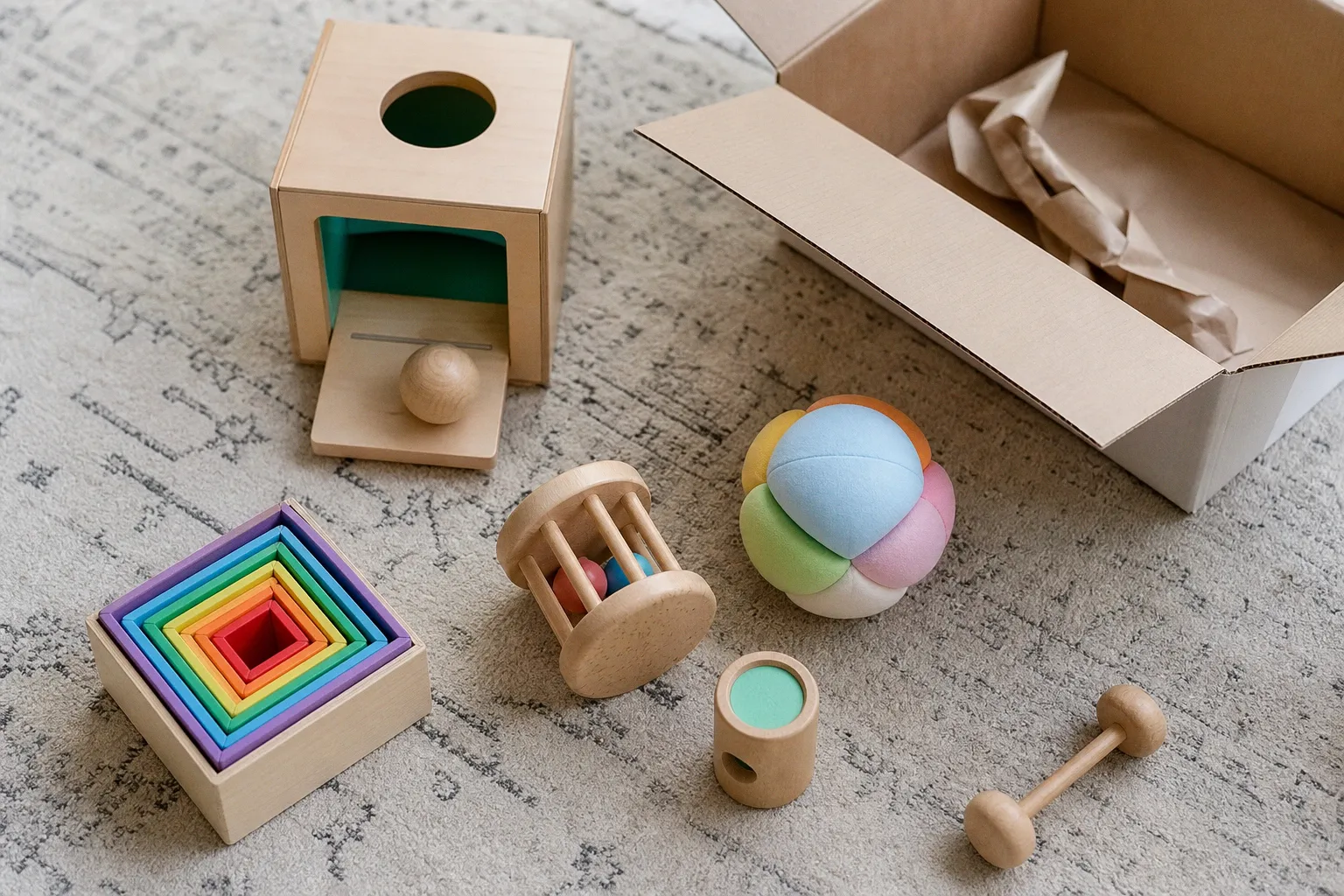
The Lovevery toy subscription is built for children from birth through age 5, and its core promise is straightforward: send age-matched play materials before parents have to spend another late-night hour comparing wooden toys, sensory balls, stacking cups, and “Montessori-inspired” products that may or may not survive a toddler.
That promise has a price. Lovevery costs $80 every two months during the first year, then $120 every three months from roughly 13 months through age 5. This is not a cheap toy rotation service, and it should not be judged like one. The real question is whether the kit timing, material quality, parent guidance, and low-clutter format justify paying a premium over buying a few well-chosen toys yourself.
My review methodology here is deliberately practical. I looked at the service as a parent would have to use it: age targeting, delivery cadence, subscription controls, safety information, replacement access, likely independent-play value, and the mess factor. I did not find an independent, reproducible dataset measuring Lovevery breakage rates, playtime, developmental outcomes, or performance against less expensive toys. So I am not going to pretend there is a laboratory-style verdict on whether these kits “make children smarter.” There isn’t.
What there is: a carefully structured subscription with a more useful age progression than most toy boxes, plus a safety history that parents should know before treating the brand’s polished marketing as a substitute for supervision.
How the stage-based delivery actually works
Lovevery calls its boxes Play Kits, not monthly boxes. That distinction matters because the schedule is tied to developmental stages, not the calendar.
For babies from 0 to 12 months, Lovevery lists six kits delivered every two months: the Looker, Charmer, Senser, Inspector, Explorer, and Thinker. After the first birthday, kits arrive every three months through the Planner kit for roughly 58–60 months and beyond.
The company uses the child’s birth date to schedule later shipments. The next kit begins processing about seven days before the child moves into the next age range. That is efficient if your child tracks close to the suggested window. It is less tidy if you have a child who is ahead in one area, uninterested in another, or simply already owns several comparable toys.
This is the first point where a Lovevery play kits review needs some realism: age-based is not the same thing as child-specific.
A 15-month-old may have strong fine motor skills but zero patience for a sorting activity. A 2-year-old may ignore a puzzle for three weeks and then suddenly use it daily. Development is uneven. The subscription can provide a sensible sequence of materials, but it cannot automatically match a child’s attention span, sensory preferences, motor planning, or household routine.
That said, the stage model is better thought through than the usual “big box of random educational fun” approach. Each age range is intended to meet a child around a recognizable developmental shift:
- Early infant kits are geared toward visual tracking, high-contrast images, grasping, and basic sensory exploration.
- Later baby kits generally move toward object permanence, cause-and-effect play, crawling-era movement, and simple containment activities.
- Toddler kits are where the practical value rises or falls. These are the years of pouring, posting, nesting, matching, early pretend play, and the never-ending urge to put small objects somewhere they do not belong.
- Preschool kits lean more toward sequencing, pre-literacy, problem-solving, emotional vocabulary, and independent activities with more steps.
The structure makes developmental sense. It does not prove developmental superiority.
A staged toy box is most useful when it reduces decision fatigue—not when it convinces parents that a child needs a new developmental intervention every few months.
For families starting with a new baby and minimal toy inventory, the progression can be particularly convenient. For families with hand-me-downs, a solid library, a play kitchen, basic blocks, and a few open-ended toys already in circulation, overlap becomes much more likely.
Lovevery subscription cost: what you are actually committing to
The pricing has two clear tiers, and the jump after the first year is substantial enough that it deserves more attention than it gets in many glowing reviews.
| Child age | Delivery schedule | Listed price per kit | What this means in practice |
|---|---|---|---|
| 0–12 months | Every 2 months | $80 | Six kits in the first year, assuming a full-year subscription |
| 13–60 months | Every 3 months | $120 | Four kits per year after the first birthday |
| Birth through age 5 | Stage-based, not monthly | Varies by age tier | A long-term premium subscription, not an occasional toy purchase |
At the listed rate, the first year involves six $80 kits. After that, the rhythm changes to four $120 kits per year. The annual spend is therefore not necessarily lower after infancy just because shipments are less frequent.
The company says the main difference between baby and older subscriptions is delivery frequency. That is useful context because parents may look at a $120 preschool kit and assume it must contain dramatically more stuff. Kit contents vary by stage and can change, so I would not buy based on an assumed item count. Look at the current contents for the exact kit you are considering.
The cost can make sense in a narrow set of circumstances:
1. You want a curated toy rotation without constantly researching products. This is the strongest case for Lovevery. The service does some filtering and sequencing for you.
2. You prefer fewer, more intentional play materials. If the alternative is repeatedly buying low-cost toys that break, clutter the floor, and hold attention for six minutes, a premium kit can be easier to justify.
3. You will use the guidance. The printed and app-based activity suggestions are part of what you are paying for. If they stay in the box under a pile of delivery paperwork, the value drops.
4. You are buying for one child who will get real use at the intended stage. If the kit will be split between siblings with very different needs, or arrive after the child has moved on, the age-match advantage weakens fast.
It makes less sense for parents who enjoy sourcing toys secondhand, already know the core developmental toy categories, or need a strict monthly budget. You can build a capable play shelf from used board books, blocks, nesting cups, scarves, puzzles, a ball, crayons, and household containers. It will not look as polished. It can still support independent play just fine.
The “Montessori” question needs a little less marketing fog
Lovevery is frequently discussed as a Montessori box. Some materials and principles are Montessori-aligned: simple objects, real-world tasks, orderly presentation, hands-on problem solving, and less battery-operated noise. That is not the same as recreating a Montessori classroom at home.
A box cannot create a prepared environment by itself. It cannot make a crowded playroom calmer, make an overtired toddler regulate, or persuade a parent to rotate materials instead of leaving every toy in one heap.
The useful part of the Lovevery approach is not the label. It is the emphasis on open-ended, repeatable activities rather than flashy single-purpose gadgets. The less useful part is when “developmental” becomes shorthand for “automatically worth the money.”
My quality test: durability, replay value, and the mess factor
For a premium toy subscription, I look at three household realities before I get excited about the educational framing.
1. Can the materials tolerate actual child use?
A toy does not need to be indestructible. It does need to survive being dropped, chewed within its intended age range, shoved under furniture, handled by siblings, and cleaned after someone discovers yogurt.
Lovevery states that its products are tested to meet, and in some cases exceed, global standards including ASTM F963, EN 71, and CPSIA. For U.S. toys manufactured or imported on or after April 20, 2024, ASTM F963-23 is the mandatory toy safety standard. Those standards matter, but parents should read the labels and inserts for the specific components in their own kit. A company-wide statement is not a substitute for checking age grading and warnings on the actual object.
I could not verify product-specific third-party lab reports or independent durability data for individual kits. That means the appropriate conclusion is limited: Lovevery provides a stated testing framework, but public evidence does not establish a universal durability score for the subscription.
For day-to-day use, I would treat the parts most likely to need monitoring exactly as I would similar toys from any brand:
- wooden pieces with knobs, pegs, or attached components;
- small loose objects in toddler and preschool activities;
- fabric components that pick up food, paint, or pet hair;
- pieces with cords, containers, or moving parts;
- anything older siblings may carry into another room and leave within reach of a younger child.
2. Does the activity have more than one afternoon of life?
This is where Lovevery’s format is generally more persuasive than a typical kids subscription box. The products are meant to stay in rotation, not be completed once and discarded.
But replay value is not an inherent property of a wooden object. It depends on whether the activity is at the right challenge level. Too easy, and a child completes it once and walks away. Too difficult, and it becomes adult-led work disguised as play.
My practical attention-span tracker would look like this:
- Under 12 months: Does the item get revisited over several days, even in short bursts? Brief engagement is normal. A baby does not need to “complete” a task for it to be worthwhile.
- 12–24 months: Does the toy invite repeated dumping, filling, posting, carrying, matching, or problem-solving? These are not throwaway behaviors; they are the work of the age.
- 2–3 years: Can the child start part of the activity without a full parent setup? If every use requires finding five pieces and narrating the process, it is not truly supporting independent play.
- 3–5 years: Does the material have enough challenge to return to after the first successful attempt? Sequencing, storytelling, early game rules, and practical-life tasks can carry more weight here than novelty.
The best Lovevery-style materials are the ones that can sit on a shelf and quietly invite use. The worst outcome is a beautiful box full of components that only comes out when an adult has enough energy to manage the instructions.
3. How much cleanup does it create?
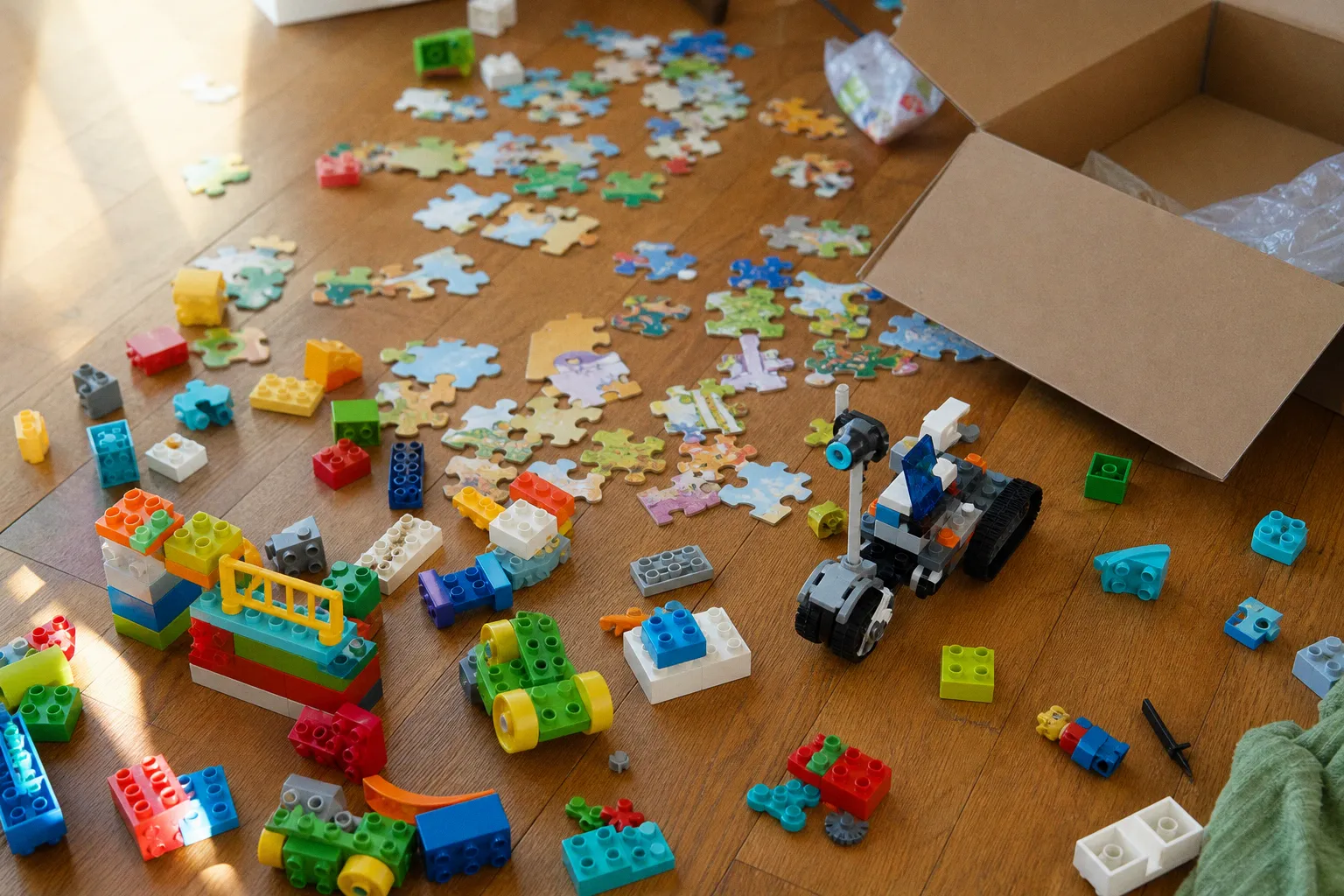
Parents should be allowed to care about this. “Open-ended play” sounds lovely until 38 tiny pieces migrate into the kitchen, the dog gets involved, and the toddler is now upset because the correct part is missing.
The mess factor varies by activity type:
| Activity type | Independent-play potential | Parent setup | Cleanup burden |
|---|---|---|---|
| Simple puzzles, object boxes, nesting toys | Often strong once introduced | Low | Low |
| Posting, sorting, matching sets | Moderate to strong | Low to moderate | Moderate; loose pieces travel |
| Art or sensory activities | Depends heavily on the child | Moderate to high | High |
| Multi-part preschool games and sequencing materials | Strong for some older children | Moderate at first | Moderate |
| Practical-life activities involving water or small objects | Can be excellent | High at younger ages | High, with obvious spill risk |
This is not a flaw unique to Lovevery. It is a basic rule of developmental play: materials that build fine motor skills often involve small parts, repetition, sorting, and transferring. That can be productive and still be annoying to clean up.
The parent-friendly strategy is rotation. Put out a limited number of items, keep multi-piece activities in a tray or basket, and do not introduce every component on delivery day. An overloaded child does not become more independent because the shelf is fuller.
The best educational toy is not the one with the longest product description. It is the one your child can return to without turning you into the full-time activity director.
Safety: the reassuring claims and the part parents should not skip
Safety messaging around premium children’s brands often becomes too soft: natural materials, rounded edges, thoughtful design, therefore nothing to worry about. No. Every toy needs to be assessed by its intended age, its condition, and the child actually using it.
Lovevery says its products meet applicable toy safety requirements and identifies ASTM F963, EN 71, and CPSIA among the standards it uses. U.S. rules also prohibit toys intended for children under 3 from containing or releasing small parts after use-and-abuse testing. There are limits for lead in accessible components and surface coatings, as well as regulated phthalates. Those regulations are meaningful guardrails, not a reason to stop supervising.
There is also a specific recall in Lovevery’s recent history. On February 1, 2024, the U.S. Consumer Product Safety Commission recalled certain 2023 Slide & Seek Ball Runs included in Babbler Play Kits for children roughly 13 to 15 months old. The issue was a wooden knob that could detach after shipping damage, creating a choking hazard. The recall covered about 47,000 units in the U.S. CPSC reported 39 knob-detachment incidents—33 during shipping and six after shipment—and no injuries.
That does not mean every Lovevery product is unsafe. It does mean the brand should not be discussed as though its safety record is beyond scrutiny. Recalls are part of the reality of children’s products, including premium ones. What matters is whether parents register or monitor recall information, inspect components when the box arrives, and remove damaged items immediately.
My no-nonsense safety routine for a Lovevery kit would be:
- Check the bottom of the box and in-box insert for the age grading and product-specific standards information.
- Inspect wooden knobs, glued parts, cords, seams, and loose pieces on arrival and after any rough handling.
- Keep toddler and preschool pieces fully out of reach of younger siblings who still mouth objects.
- Do not assume “educational” means safe for unsupervised use. A sorting activity may be age-appropriate for one child and a choking hazard for another in the same household.
- Follow recall instructions promptly if a product is affected. Do not wait for a part to loosen further.
This is especially relevant in homes with an infant and an older sibling. The age range printed on the toy applies to the intended user, not to the smallest child crawling around the room.
Shipping, skips, and cancellation: where subscriptions become irritating
The Lovevery toy subscription starts preparing the first kit for shipment immediately after checkout. That is normal for a curated product, but it reduces the room for second thoughts. If you are buying as a gift or timing a kit around a move, birthday, travel period, or newborn arrival, confirm the current timing before placing the order.
For later kits, scheduling is based on the birth date you enter. Lovevery says the next order begins processing about seven days before a child reaches the next age stage. Cancellation must be completed at least three days before the next shipping date. If an order has already been received or confirmed for shipment, cancelling does not stop that order.
That is not an unusually harsh policy, but it is exactly the sort of detail busy parents miss. A subscription that arrives every two or three months is easy to forget until the charge appears.
The company says subscribers can buy missed or skipped kits at subscriber pricing through the Subscriber Shop, and selected replacement parts are available there as well. It also offers single-kit purchases for some, not all, Play Kits. That flexibility is helpful, especially if you started late or want to avoid paying for a stage that overlaps heavily with toys you own.
Still, do not assume you can always cherry-pick every kit later. The single-kit option is not universal.
A few management habits will save you money:
1. Set a calendar reminder before the processing window. Use the stated three-day cancellation cutoff as the absolute last line, not the date you plan to remember.
2. Audit your toy shelf before the next stage. If you already own several shape sorters, bead activities, board books, or pretend-play materials, compare the coming kit carefully.
3. Decide whether the guidance is being used. If you are not opening the activity ideas or app resources, you may be paying for a layer of service you do not need.
4. Keep packaging and product labels until you have checked all pieces. This is boring advice, but it makes safety and replacement questions much easier.
5. Avoid buying a kit solely because the age window is about to close. A child does not expire out of a useful activity on a birthday morning.
What comes beyond the toys
A Lovevery subscription includes access to the Lovevery App, a library of Parent Courses, and a subscriber shop with selected books, products, and replacement parts. This is one reason the service costs more than a standard toy delivery: it is selling an ecosystem, not just a box.
The app and courses may be genuinely useful for first-time parents or caregivers who want short, stage-specific explanations of what a toy is for and how to introduce it. Good guidance can prevent a common frustration: handing a child a new object, getting no reaction, and deciding it was a waste of money when the setup or timing was simply off.
But parent guidance should stay guidance. If an activity requires you to consult a course every time you use it, it is too complicated for your household right now. The best materials eventually become familiar enough that a child can choose them, use them, and put them away with decreasing adult involvement.
Lovevery Play Gym versus the Play Kits
Parents often lump the Play Gym into the same decision, but it is a separate product category. The Play Gym is a one-time baby activity purchase, while the Play Kits are an ongoing stage-based subscription.
The choice is less about which is “better” and more about your actual need:
- Choose a Play Gym if you want one concentrated infant setup for tummy time, visual stimulation, reaching, and early sensory play.
- Choose Play Kits if you want a continuing stream of age-targeted materials and are willing to pay for the curation.
- Choose neither, at least for now, if you have a limited budget and would rather build a small, flexible toy rotation yourself.
For many families, the Play Gym is easier to justify than a multi-year subscription because it is a known one-time cost. The subscription is only a better value if it consistently prevents duplicate purchases and earns enough use to replace your normal toy-shopping habit.
Final verdict: useful curation, not a developmental necessity
Lovevery is one of the more coherent premium kids subscription box models because its delivery schedule follows broad developmental stages rather than sending generic crafts or disposable activities. The materials are positioned for repeat use, the guidance can help parents introduce play more intentionally, and the subscription controls are more flexible than a locked-in annual plan.
But this is not a budget service, and it is not a magic developmental shortcut. There is no independent evidence that Lovevery Play Kits make children hit milestones earlier, improve school readiness, or outperform thoughtfully selected lower-cost toys. The brand’s safety claims should be read alongside the documented 2024 recall, not instead of it.
My strict assessment: the Lovevery toy subscription is worth considering for a parent who wants curated, age-appropriate toys, can afford the recurring cost, and will actively rotate and supervise the materials. It is not worth it for a family hoping the box will create independent play on its own, replace parental attention, or solve a toy-clutter problem without changing how toys are managed at home.
The supervision requirement is moderate for babies and toddlers, and it stays real for multi-piece preschool activities. That is not a failure. It is just the honest version of educational play: good materials help, but someone still has to notice the loose knob, retrieve the missing piece from under the couch, and decide when the activity has become more work than play.
FAQ
How much does a Lovevery subscription cost?
Are Lovevery toys Montessori-certified?
What should I do if I have a child with a different developmental pace?
Are Lovevery toys safe for unsupervised play?
Can I cancel my Lovevery subscription at any time?
 Kids & Education BoxesMatch Children's Book Clubs to Your Kid's Reading Level
 Kids & Education BoxesKids subscription box guide: what to buy and what to skip
 Kids & Education BoxesToy subscription box verdict: what to buy and key caveats
 Kids & Education BoxesToy subscription comparison: what to select and the trade-offs