STEM subscription box value: is it worth the price?
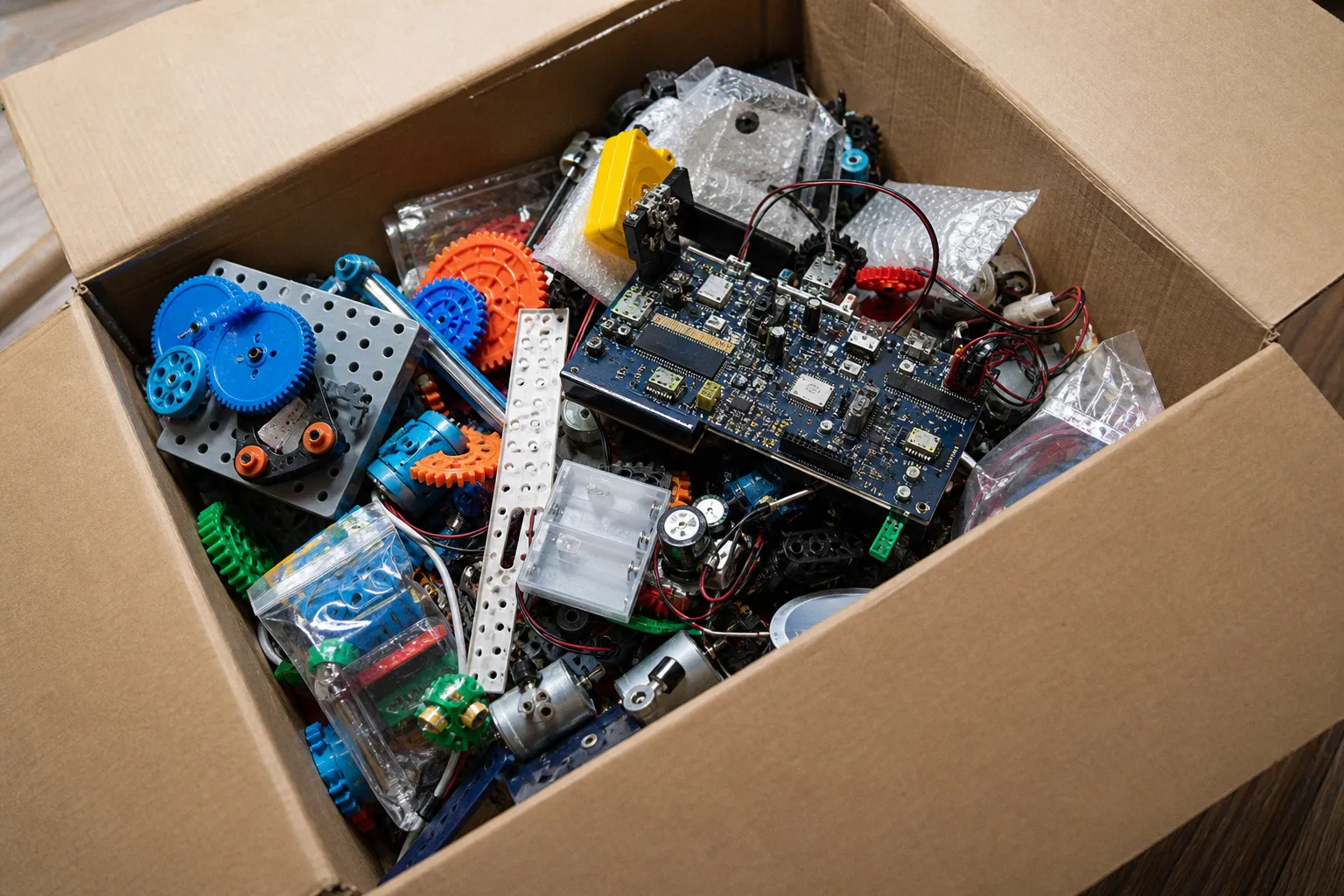
A box lands on the doorstep, packed with motors, wiring, pre-cut wood, or chemistry glassware, promising to turn your kid into an inventor, a coder, a physicist, or at least someone who willingly puts down the iPad for an hour. The reality on the kitchen table is messier, and after working through more science and engineering kits than I care to admit, I can tell you the gap between a box that genuinely teaches and one that just photographs well for the unboxing reel.
So what does a monthly STEM subscription box actually cost, and what does that price tag get you in the real world of spilled baking soda and snapped gearboxes? Let's break it down tier by tier, then talk about the parts nobody puts in the sales copy.
The Economics of Monthly STEM Kits: Pricing Tiers and What You Get
The first thing I noticed when I started laying these boxes out side by side is that the phrase "STEM subscription" hides a really wide price spread. At the budget end, you're paying roughly $16 to $25 per box. Science4you starts at $19.99 per box, KiwiCo's Tinker Crate lands around $16.95 to $22.95, and CrunchLabs' standard Build Box sits at $24.95. Step up to MEL Science's Physics line and you're at about $34.90 per month, but you get two to three experiments per shipment, which changes the math a lot. At the top end, Lovevery ships its play kits quarterly at about $120 per delivery, and that's a different animal entirely.
Here's how the main contenders stack up in plain numbers:
| Box | Approx. Price | Cadence | Activity Count | Target Age |
|---|---|---|---|---|
| Science4you | from $19.99/box | monthly | 10+ activities per kit | mixed, often 6+ |
| KiwiCo (Tinker Crate) | $16.95–$22.95/box | monthly | 1 main project | 9–16+ |
| KiwiCo (standard lines) | from $24/box | monthly | 1 main project | varies by line |
| CrunchLabs Build Box | $24.95/box | monthly | 1 main build | 8–12+ |
| MEL Science Physics | ~$34.90/month | monthly | 2–3 experiments | 8–14 |
| CrunchLabs HackPack | $65/box | every other month | 1 coding/electronics project | 14+ |
| Lovevery | $120/box | quarterly | multiple play objects | 0–3 |
Two things jump out. Activity count and price per activity move in opposite directions. Science4you crams a lot of small activities into a $19.99 box. KiwiCo and the standard CrunchLabs Build Box give you one carefully engineered main project per shipment. MEL Physics splits the difference with two to three experiments. CrunchLabs' HackPack, at $65 every other month, is essentially a coding-focused subscription with a one-year minimum commitment, aimed at older kids who want to modify pre-written code rather than just watch a build happen.
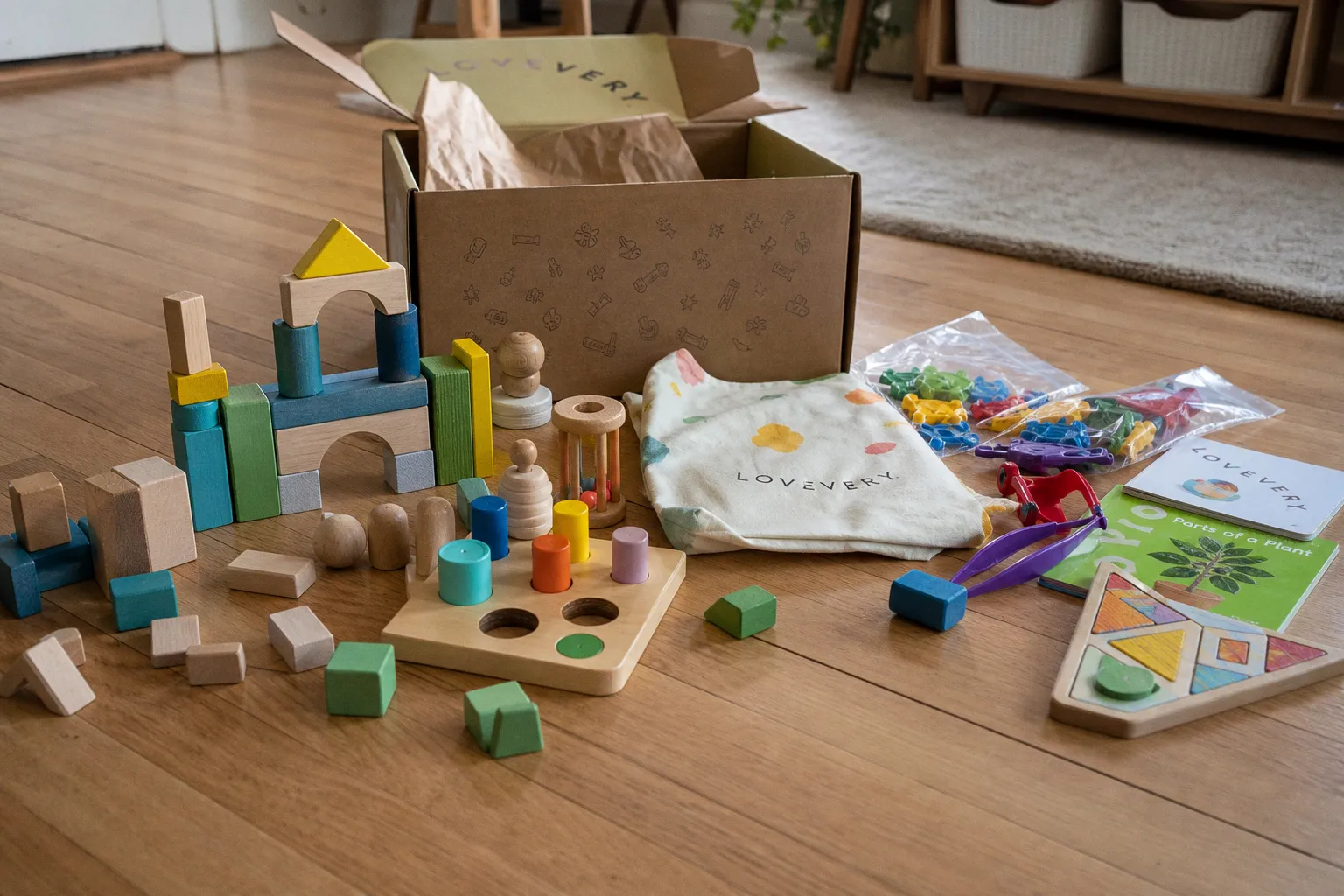
Then there's Lovevery, which lives in a different neighborhood entirely. A $120 quarterly box for toddlers isn't really competing with a $25 monthly engineering kit. It's a play curriculum, replacing the impulse buy at the toy store for parents who want a Montessori-flavored alternative. Worth measuring against the toy budget, not the STEM-class budget.
Convenience vs. Creativity: The Hidden Cost of Pre-Packaged Learning
The clearest win for any STEM subscription box is convenience. If you've ever tried to source a specific vibration motor, a CR2032 battery holder, or a tiny gear that actually fits the rest of the build, you know the half-hour you spend hunting for a single component can kill the enthusiasm of an eight-year-old faster than anything. A well-designed box solves that problem entirely. Everything in the tray is matched, the tolerances are right, and the build actually works on the first try.
That hands-off reliability is the real value proposition. You're not just paying for parts; you're paying for someone else to have already done the prototyping, the part-number debugging, and the age-appropriate instruction writing. For a working parent, the time saved is often worth more than the contents of the box.
The single biggest value any STEM box delivers isn't the motor or the LED. It's the elimination of the half-hour scavenger hunt that would otherwise kill the project before it starts.
But here's the wrinkle. When the box does all the engineering selection for you, you also get the instructions. Step-by-step, illustrated, usually numbered. Your child follows them, and at the end there's a working gizmo. Done. The thing works. The kid is proud. The shelf now has a new occupant.
What it doesn't easily do is the open-ended "what if I tried it differently?" part. The build is closed. The parts are sufficient for the build and not much else. That's not a flaw, exactly, but it's a ceiling.
Beyond the Build: Evaluating Long-Term Engagement and Shelf Life
A pattern I keep hearing from parents, and one that has matched my own experience testing these boxes, is the dusty shelf problem. The project gets built. It might run for a week. Then it joins the rest of the finished builds in the corner of the bedroom, where it sits until someone sneaks it into a yard sale pile.
The honest question isn't whether the build worked. It's whether the build earns a second life. Some boxes do better here than others. A wooden trebuchet might get hauled outside for a few afternoons. A circuit-heavy flashlight might lose its battery cover within a month. A chemistry experiment, by its nature, doesn't survive at all: once the reaction is done, it's done.
This is where activity count starts to matter more than box price. A Science4you-style kit with 10+ activities spreads engagement across the month. A single-project subscription has to hit harder per build to feel like it justified the slot in the budget.
A practical tip from my own testing: before the box even arrives, decide where the finished build will live. If the answer is "on a shelf in the garage," that's a signal to either accept the trade-off or to steer toward boxes with more consumable, project-per-use content.
Bridging the Gap: How Digital Integration Enhances Physical Kits
The biggest evolution I've seen in this category over the past few years is what happens outside the box. CrunchLabs, launched in 2022 by former NASA engineer Mark Rober, leans hard into this. Every Build Box comes with access to a roughly 20-minute video where Rober walks through the science behind the project. The video isn't a build-along; it's a "why this works" deep dive.
This pairing matters more than the marketing suggests. The physical build gives the kid something to do with their hands. The video gives them a story about what's happening. Together, you get something close to a mini-lesson, not just a craft project. For an 8-to-12-year-old, that context is the difference between "I made a fan" and "I made a fan because Bernoulli's principle says fast-moving air has lower pressure."
Other boxes handle this differently. MEL Science leans into a companion app with AR visualizations of the molecules. KiwiCo ties its lines to themed story arcs that reward opening the next box. None of these digital extras are strictly necessary, but they shift the box from a single afternoon's project into something that sticks in the brain a little longer.
The Divergent Thinking Trade-off: Structured Kits vs. Open-Ended Play
This is the part of the conversation parents usually don't have until after the third box. Academic research into structured building suggests something worth sitting with: kids who follow detailed step-by-step instructions to a finished build tend to score lower on subsequent tasks that ask for creativity, originality, and divergent thinking, compared to kids who are given the same loose materials and left to free-build.
That doesn't mean close-ended kits are bad. It means they occupy a specific slot in the overall diet. A well-designed STEM box is, in effect, a guided lab. The lab teaches a specific principle, demonstrates a specific technique, and ends with a specific finished object. The free-building play, with a pile of cardboard, tape, and loose parts, is where the divergent thinking actually gets exercised.
The mistake, in my view, is treating the STEM subscription box as a replacement for open-ended play. It's a complement. The box handles the engineering project, the chemistry demo, the verified experiment. The junk-drawer project across the kitchen handles the "what if I put the motor here instead" iteration. Both matter. Kids who only get the kit-and-instructions experience are missing the half of the activity that builds the muscle of real tinkering.
Final Position
So, is a STEM subscription box worth the price?
Yes, with a clear-eyed view of what you're buying. You're paying $20 to $35 a month to outsource the most annoying part of a parent-led STEM project: figuring out which parts actually work together and writing instructions an eight-year-old can follow. For a household that values screen-free, hands-on activity and doesn't have the time or the parts drawer to source it themselves, the math is reasonable. CrunchLabs in particular delivers solid engineering projects with surprisingly strong educational video backup, and it sits at the friendlier end of the price range. MEL Physics is the right call if the kid is genuinely into physics and you want more than one experiment per shipment; if chemistry is more the draw, MEL Science's chemistry subscription (commonly branded as MEL Chemistry) covers the same multi-experiment format with a different lab focus. KiwiCo's Tinker Crate is the steady, reliable middle of the pack. Science4you is the high-activity-count budget option that doubles as entertainment for a wider age range. Lovevery at $120 quarterly is a different conversation entirely, more preschool curriculum than STEM kit, and it should be evaluated against the toy budget, not the science budget.
What you should not expect: a guaranteed bump in school grades, a straight line to a STEM career, or a substitute for the free-play tinkering that actually builds originality. The boxes are tools. They're good tools, well-designed and convenient. Used alongside a junk drawer, a roll of tape, and a parent willing to occasionally say "figure it out yourself," they earn their keep.
The dusty shelf is real. The video lessons are real. The look on a kid's face when they finally understand why the thing they just built actually works is real. That's what the price is buying, and once you frame it that way, the value question answers itself.
FAQ
Are STEM subscription boxes worth the money?
What is the difference between a single-project kit and a multi-activity kit?
Do STEM kits help with school grades or career preparation?
How do digital components improve the learning experience?
Why do some STEM kits end up on a dusty shelf?
 Kids & Education BoxesMatch Children's Book Clubs to Your Kid's Reading Level
 Kids & Education BoxesKids subscription box guide: what to buy and what to skip
 Kids & Education BoxesToy subscription box verdict: what to buy and key caveats
 Kids & Education BoxesToy subscription comparison: what to select and the trade-offs